
0%

Sunshine is only part of the story. Heat, monsoon, dust and the local grid all influence how a system should be designed.
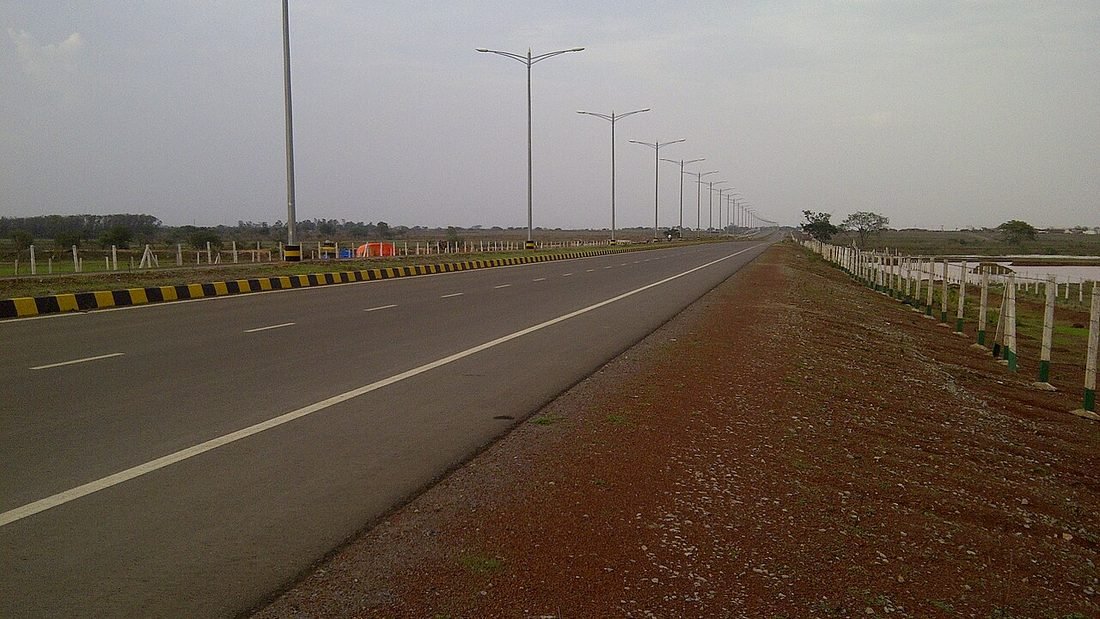
Image: NEW RAIPUR EXPRESS WAYS by Gupta.sameer0787, CC BY-SA 3.0, via Wikimedia Commons.
Every solar guide says the sun shines. What matters for a rooftop in the capital is how it shines, how hot it gets, how long the monsoon lasts, how much dust settles on the glass and what the grid does when you plug into it. This page explains the local conditions behind solar Raipur projects and what they mean for design, cost and care, in plain language.
Quick answer: Raipur is an excellent solar city with three local considerations: dust in the dry season, storms before the monsoon and a grid that is generally good but not perfect. A good design handles all three.
| Factor | Raipur (approximate) | Why it matters |
|---|---|---|
| Latitude | About 21 degrees north | Sets the ideal tilt of about 20 to 25 degrees facing south |
| Clear days a year | About 300 | More generation days than most Indian cities |
| Daily irradiance | 5.0 - 5.5 kWh per sq m | Source of 4.0 - 4.5 units per kW per day |
| Annual yield | 1,400 - 1,500 units per kW | Basis of every savings estimate |
| Season | Conditions | Effect on your system |
|---|---|---|
| Winter (Dec - Feb) | Cool, clear, some fog | Panels efficient; short days |
| Spring and summer (Mar - Jun) | Hot, dry, dusty | Highest output; dust builds; cleaning matters |
| Monsoon (Jul - Sep) | Humid, cloudy, heavy rain | Lowest output; rain cleans panels; seals tested |
| Post-monsoon (Oct - Nov) | Clear, mild | Strong output after the rains |
A month-by-month view is in solar in Raipur month by month.
Solar cells convert light to electricity less efficiently as they heat up. On a Raipur summer afternoon, panel surface temperature can be far above air temperature. Datasheets quote a temperature coefficient, a small negative percentage per degree. Panels with a better coefficient, a ventilated gap under the array and an inverter mounted in the shade all help. The loss is real but modest, and strong spring sunshine more than offsets it.
Pre-monsoon squalls arrive with high winds and frequent lightning. This is why solar installation in Raipur must use hot-dip galvanised structures sized for wind uplift, properly anchored foundations, earthing and surge protection. Our guides on wind and hail durability and lightning protection go deeper.
Dry months bring road and construction dust, and homes near industrial areas see more. A soft brush and clean water every two to four weeks in March to June keeps output close to design. Clean in the early morning or evening, never on hot glass. See solar maintenance in Raipur.
A grid-tied system sends surplus to the grid and draws from it when the sun is down, with the bidirectional net meter recording both. The distribution company approves feasibility, fits the meter and inspects the plant. Capacity is linked to your sanctioned load. When the grid fails, a plain on-grid system shuts off for lineman safety, which is why homes with frequent long cuts consider hybrid backup. Read solar net metering in Raipur.
Most homes have flat RCC roofs with water tanks and stair covers that cast shadows. Shade and layout matter more than the postcode; see solar layout around water tanks and direction and tilt. Sheet roofs in workshops and godowns need a different mounting method; see solar on sheet roofs.
A 3 kW system in Raipur might show about 12 to 13 units on a clear March day, about 7 on a typical July day and about 11 in January. Monthly totals of 280 in July and 410 in March add up to roughly 4,300 units a year. If a clear March day gives 9 units, check for dust, shade or a fault. Knowing the normal pattern is the best monitoring tool you have.
Raipur is the commercial centre of a state with heavy industry, and its grid carries large industrial and mining loads alongside homes and shops. For rooftop owners this has two consequences. First, daytime demand is high, so exported solar energy is consumed nearby and the network benefits. Second, supply quality in dense and outer areas varies: some feeders are stable, others see regular cuts. Before choosing between on-grid and hybrid, record outages for a month and note their duration and time of day.
| Question | Why it matters | How to find out |
|---|---|---|
| How often and how long are power cuts on my feeder? | Decides on-grid vs hybrid | Keep a log; ask neighbours |
| Is my sanctioned load enough for the system? | Net-metered capacity is linked to it | Check your bill |
| Where will tanks and dishes cast shadows? | Shade costs output every day | Survey with shading study |
| Is my roof sound and waterproofed? | Foundations will be fixed into it | Visual check and survey |
| Who will clean the panels and how? | Dust cuts output in March to June | Plan access and schedule |
Raipur receives roughly 1,200 mm of rain, mostly between June and September. Humidity and sustained wet weather test cable glands, junction boxes and foundation seals. Insist on outdoor-rated connectors, drip loops on cables entering enclosures and sealed foundation points. After the first heavy rain of the season, have the installer or a technician inspect for leaks and loosened fixings.
Dust sources include roads, construction, dry fields and industry. Homes near busy roads or construction sites see faster soiling. If you live near an industrial area, expect to clean more often. A simple rule is to wash when the glass looks visibly dull and to compare generation before and after the first few washes. You will soon learn your own rhythm.
Summer temperatures stress electronics. Mount the inverter in shade with airflow, away from afternoon sun and rain, and avoid enclosed cupboards. A well-sited inverter lasts longer and trips less often in heat. Read our solar installation in Raipur checklist for what to inspect.
| Month | Action |
|---|---|
| February | Clean, inspect and prepare for peak generation |
| April - May | Clean regularly; inspect structure and earthing before the monsoon |
| June - September | Check after storms; keep drains clear |
| October | Post-monsoon inspection for rust and loose fixings |
| December | Check for fog or leaf shade; review annual generation |
If you are planning a project, read solar in Raipur first, then compare providers using the top 10 solar companies in Raipur shortlist method and the best solar company in Raipur scorecard. Money questions are covered under solar subsidy in Raipur and PM Surya Ghar Yojna in Raipur, delivery under solar installation in Raipur, and local conditions under solar Raipur. Gupta Agro Solar is a solar company in Raipur that will survey your roof free. You can also browse the solar blog, our solar services, the Gupta Agro Solar home page or contact us for a free survey.
About 300 clear days a year and daily irradiance of roughly 5.0 to 5.5 kWh per square metre, which supports about 1,400 to 1,500 units per kW per year.
Panels lose a little output when hot, described by the temperature coefficient. Good modules, ventilated mounting and shaded inverter locations limit the effect.
Output falls on overcast days, often to 30 to 50 per cent of peak, and July and August are the weakest months. Rain also cleans panels, and the rest of the year more than compensates.
Yes, especially March to June. A layer of dust can cut output 15 to 25 per cent. Regular cleaning recovers it.
On-grid solar needs a live grid to export to and to draw from. In stable areas that is fine. Where cuts are long and frequent, consider a hybrid system.
Visit C-29, Sector 3, Devendra Nagar, Raipur, Chhattisgarh 492001, call 083051 31420 or send your details online for a free site survey and a written quotation with the subsidy worked out.
A site survey that checks shade, structure, earthing and cleaning access for Raipur's conditions.