
0%
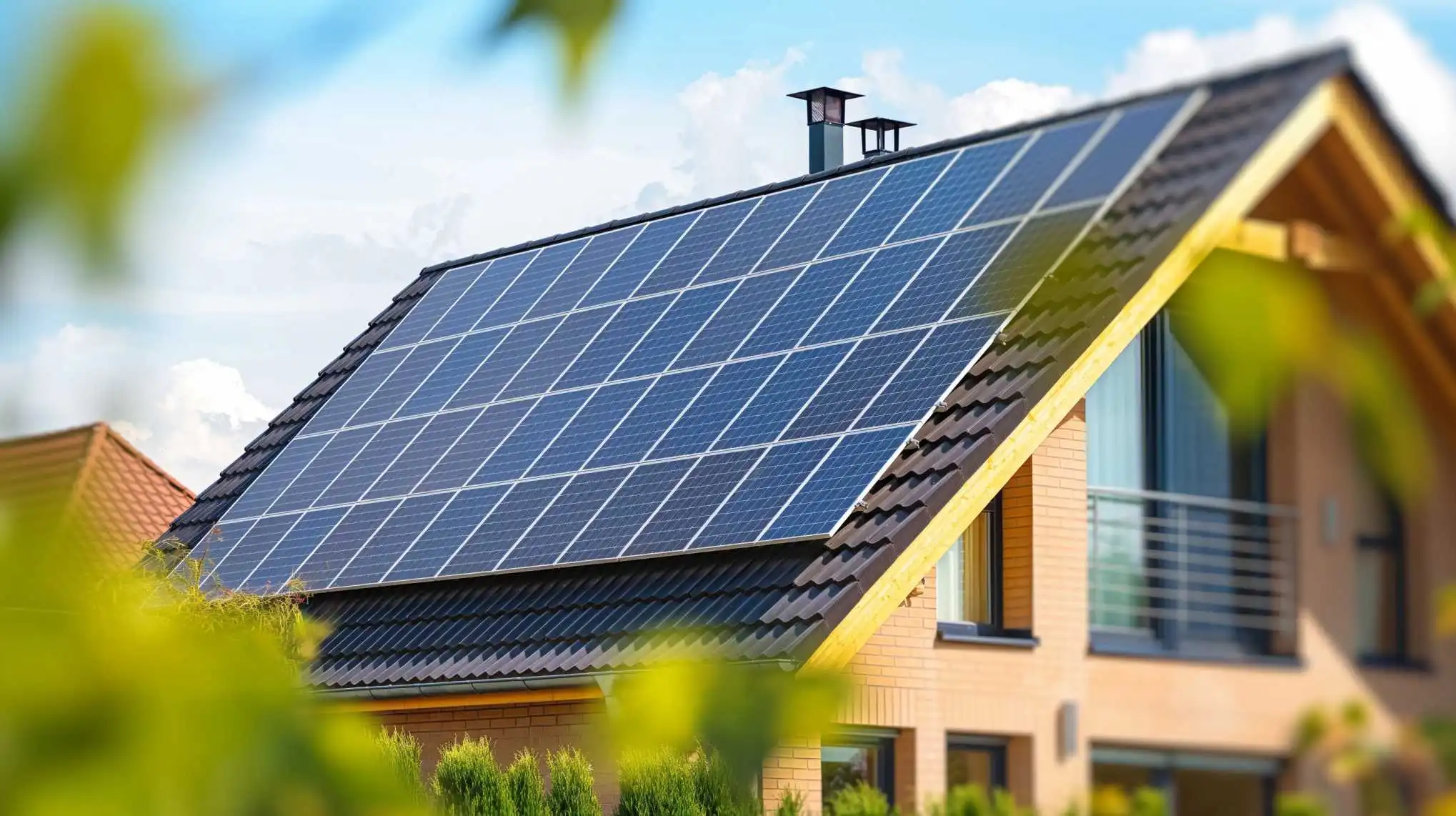
Sunshine, costs, subsidy, coastal design and how to choose - everything about solar in Odisha in one guide.

Image: Gupta Agro Solar (illustration).
Solar in Odisha is moving from a niche choice to an everyday decision for families, shop owners, factories and farmers. With strong sunshine across most of the year, rising electricity use, a long coastline that suffers cyclones and outages, large industrial and mining belts and a farm economy built around paddy, solar in Odisha solves real problems: it cuts bills, gives some protection from tariff increases, supports irrigation and, with a hybrid design, keeps essential loads running when the grid fails. This complete guide to solar in Odisha explains how much sun the state gets, what solar costs, how the PM Surya Ghar subsidy works, what to check on a roof near the coast, how to choose a solar company in Odisha and how to keep a system working for 25 years.
Quick answer: for most owner-occupied homes in Odisha with bills of about Rs 1,500 a month or more, a grid-tied rooftop system of 2 to 5 kW sized from twelve months of bills is the most sensible form of solar in Odisha. Eligible homes can claim up to Rs 78,000 of central subsidy for 3 kW and above, businesses benefit from higher commercial tariffs and farmers can replace diesel with solar pumps. Coastal and cyclone-prone districts need stronger structures and corrosion-resistant fixings, so choose a company that designs for them. Confirm all state-level rules, including net metering and any state support, with the distribution company and official portals before you pay.
Odisha lies on India's east coast, between roughly 17 and 22 degrees north, and most of the state receives good solar radiation through the year. The state has long, hot summers, a distinct monsoon and winters that are mild and mostly clear. For a rooftop plant this means a long, reliable generating season with a dip in the rainy months. At the same time, households in many parts of the state deal with voltage fluctuation and occasional power cuts, especially after storms, and commercial and industrial consumers pay tariffs high enough to make self-generation attractive. Together these conditions make solar in Odisha a practical investment, not a fashion.
| Reason | What it means for solar in Odisha |
|---|---|
| Strong sunshine for most of the year | A well-sited kilowatt typically produces in the range of 1,300 to 1,500 units a year; confirm with a site-specific estimate |
| Rising electricity use | Air conditioners, coolers and appliances push bills up, so each unit you generate saves more |
| Cyclone and storm outages on the coast | Hybrid systems with a battery can keep fans, lights and a router running on backup circuits |
| Large industrial and mining belts | Daytime industrial loads match solar; rooftop and ground plants can reduce power cost |
| Paddy-based agriculture | Solar pumps replace diesel and unreliable supply for irrigation |
| Central subsidy for homes | Up to Rs 78,000 for eligible homes with 3 kW or more under PM Surya Ghar |
The most common question about solar in Odisha is simple: how many units will my system make? As a planning rule, a rooftop kilowatt in most of Odisha produces roughly 3.7 to 4.3 units a day on average, or about 1,350 to 1,500 units a year. Production is highest in spring and in the clear weeks after the monsoon, lower in the rainy season and steady in winter. Heat reduces efficiency a little in peak summer, humidity and haze can trim output on some days and dust or salt deposits near the coast reduce it if panels are not cleaned. These are planning numbers, not guarantees; a good company will show you an estimate with its assumptions.
| Season (general pattern) | Typical output per kW per day (indicative) | What affects it |
|---|---|---|
| February to May | About 4.2 - 4.8 units | Long clear days; high heat trims efficiency a little |
| June to September (monsoon) | About 2.6 - 3.4 units | Heavy cloud and rain; panels also get washed |
| October to November | About 3.8 - 4.3 units | Post-monsoon clarity; cyclone-season cloud on some days |
| December to January | About 3.7 - 4.2 units | Cool, mostly clear; shorter days |
A 3 kW system might therefore generate roughly 330 to 380 units a month on average, depending on location and design. If your home uses about that much, a 3 kW system can offset a large share of the bill; if you use more, size up; if you use less, size down. Our guide to kW vs kWh vs kWp explains the arithmetic, and our savings calculator lets you test a bill.
Prices depend on system size, equipment, structure, roof type and scope, and they change with policy and supply. The ranges below are indicative figures for 2026 before subsidy, based on typical rooftop systems; they are not a quotation. Coastal projects may add the cost of stronger structures and corrosion-resistant fixings.
| System | Typical use it serves | Indicative price before subsidy | Central subsidy (eligible homes) | Approx. net cost |
|---|---|---|---|---|
| 1 kW | Rs 600 - 1,000 monthly bill | Rs 50,000 - 80,000 | Rs 30,000 | Rs 20,000 - 50,000 |
| 2 kW | Rs 1,500 - 2,000 monthly bill | Rs 1.0 - 1.4 lakh | Rs 60,000 | Rs 40,000 - 80,000 |
| 3 kW | About 330 - 380 units a month | Rs 1.4 - 1.9 lakh | Rs 78,000 | Rs 62,000 - 1.12 lakh |
| 5 kW | About 550 - 650 units a month | Rs 2.2 - 3.0 lakh | Rs 78,000 (cap) | Rs 1.4 - 2.2 lakh |
| 10 kW | Shops, offices, small institutions | Rs 4.0 - 5.8 lakh | Not applicable (commercial) | Rs 4.0 - 5.8 lakh |
The subsidy is credited after commissioning, so you pay the full price first and receive the credit afterwards. Compare quotations on net cost for the same scope, not on the headline price. See our price list and cost per kW explained for what moves the price; the logic is the same across states even though local rates differ.
Under the central PM Surya Ghar rooftop scheme, eligible households can receive up to Rs 30,000 per kW for the first 2 kW and Rs 18,000 for the third kW, a maximum of Rs 78,000 for systems of 3 kW and above. The scheme runs through a national portal where you register with your state, distribution company and consumer number, and installation must be done by a vendor registered for your district using modules that meet the domestic content rule. Odisha may offer additional support or have its own procedures through state agencies; those details change and must be confirmed from official sources. See our dedicated page, solar subsidy in Odisha, for the process and a checklist.
| Type | How it works | Works in a power cut | Best for |
|---|---|---|---|
| On-grid (grid-tied) | Feeds your home first and exports the surplus through a net meter | No; shuts down for safety | Most urban and semi-urban homes, shops and offices |
| Hybrid | Grid-connected with a battery that supplies selected circuits in an outage | Yes, on backup circuits | Coastal and storm-prone areas, homes with frequent outages, clinics, work-from-home users |
| Off-grid | Standalone panels, inverter and batteries | Yes | Remote farms, hamlets and sites without reliable grid |
Most homes in towns choose on-grid for the lowest cost, while households that face frequent outages after storms consider hybrid. Size the battery to essential loads, not the whole house; see inverter and battery for power cuts for the sizing method.
Odisha's coast is exposed to cyclones, strong winds and heavy rain, and salt-laden air near the sea corrodes ordinary steel and fasteners. These conditions do not make solar unsuitable, but they change what good installation looks like. Ask any solar company in Odisha how it designs for them.
| Condition | Design response |
|---|---|
| Strong winds and cyclones | Structure and foundations designed for the local wind speed, sound anchoring, secure clamps, low-tilt layouts where appropriate, a written wind-load basis |
| Salt-laden air near the coast | Hot-dip galvanised or corrosion-resistant steel, stainless fasteners, coated cable trays, sealed junction boxes |
| Heavy monsoon rain and humidity | Sealed foundations, waterproofing check before installation, outdoor-rated connectors with drip loops, inverter in shade with ventilation |
| Flooding in low-lying areas | Keep inverter, battery and distribution boards above flood levels; protect ground-level equipment |
| Lightning | Earthing, lightning arrestor and surge protection devices |
| After a storm | Inspect clamps, cables, glass and earthing before switching back on; keep photographs for insurance |
For related guidance, see wind and hail durability, lightning protection for rooftop solar and solar insurance.
Home owners usually start with their electricity bill. Divide your average monthly units by about 120 to estimate the kilowatts you need, check you have about 10 square metres of shadow-free roof per kW, and decide grid-tied or hybrid from your outage log. A family using about 350 units a month typically looks at 3 kW; one using 600 units looks at 5 kW. Independent houses with concrete roofs, common in towns such as Bhubaneswar and Cuttack, are the easiest to design for. See rooftop solar in Bhubaneswar, Cuttack and Rourkela.
Commercial tariffs are higher than domestic ones, which shortens payback, and most of a shop or office's load falls in daylight. A 5 to 50 kW rooftop plant often covers a large share of daytime use. The household subsidy generally does not apply to commercial connections, so returns rest on bill savings and tax treatment such as depreciation; ask your accountant.
Steel, aluminium, mining-linked services, cold storage, rice mills and port-related industry run large steady loads and have big roofs. Industrial solar needs a structural assessment, protection and power-quality design, approvals handling and a maintenance contract. See solar for industries and farms in Odisha.
Paddy and vegetable irrigation make solar pumps attractive, and agriculture schemes through state agencies may support them. Size the pump from your water need and total head, store water in a tank rather than batteries, and protect panels against theft and rodents. The same page covers farm solar in detail.
| Step | What happens | Typical time |
|---|---|---|
| 1. Collect bills and check the roof | Twelve months of bills, roof photographs, shade notes | A day |
| 2. Free site survey | Roof measurement, shade study, structure and electrical panel check | Under an hour on site |
| 3. Design and quotation | Size, equipment, structure, protection, price and subsidy shown separately | A few days |
| 4. Registration and approvals | Portal registration and distribution company feasibility | Days to weeks |
| 5. Installation | Structure, panels, inverter, wiring, earthing and testing | 1 - 3 days for a home |
| 6. Net meter and inspection | Inspection, bi-directional meter, commissioning | 1 - 4 weeks, varies by division |
| 7. Subsidy and maintenance | Claim for eligible homes; cleaning and annual inspection | About a month, then ongoing |
These are typical ranges, not promises; each division and season differs. Read our approvals and timeline guide for the steps, remembering that in Odisha the distribution company and state regulator differ from those in Chhattisgarh.
A solar company in Odisha should be registered for your district on the national portal, survey your roof in person, name modules and inverter with warranties, list structure, earthing and protection, state its paperwork scope, give written workmanship and leak warranties, take payment in milestones and offer service you can actually reach in your town. See our page solar company in Odisha and the shortlist method on top 10 solar companies in Odisha.
Solar needs little work but not none. Wash panels with plain water and a soft cloth every three to four weeks in dry months and after dusty or salty spells, preferably in the early morning. Check the inverter app weekly and compare generation with your estimate. Inspect the structure, clamps, cable routing and earthing before and after the monsoon and after any cyclone. An annual inspection by a qualified technician and an AMC with written response times protect the investment. See solar maintenance and solar dust and cleaning for method; the practice is the same, with extra attention to salt near the coast.
Gupta Agro Solar is based in Raipur, Chhattisgarh. We are expanding our guidance for Odisha, and for projects in Odisha we discuss survey logistics, feasibility and service arrangements with you openly before any commitment. We bring more than a decade of rooftop, industrial and farm solar experience from Raipur, a clear process and the same checklists we give you to test us. If you are considering solar in Odisha, you can use this guide and our checklists to compare any company, including ours, and then contact us to discuss your project.
Continue with Solar in Odisha, Solar Company in Odisha, Solar Subsidy in Odisha, Rooftop Solar in Bhubaneswar, Cuttack and Rourkela, Solar for Industries and Farms in Odisha and Top 10 Solar Companies in Odisha. Our home state guides are also useful for comparison: solar company in Chhattisgarh, best solar company in Chhattisgarh and top 10 solar companies in Chhattisgarh. You can also browse the solar blog, our solar services, the Gupta Agro Solar home page or contact us.
Indicatively Rs 1.4 to 1.9 lakh for a 3 kW home system and Rs 2.2 to 3.0 lakh for 5 kW before subsidy, depending on equipment, structure and scope; a written quotation after a survey gives the final figure.
Eligible homes can receive up to Rs 30,000 per kW for the first 2 kW and Rs 18,000 for the third kW under PM Surya Ghar, a maximum of Rs 78,000 for 3 kW and above; confirm any state support with official sources.
As a planning rule, roughly 1,350 to 1,500 units per kW per year, with lower output in the monsoon months; a site-specific estimate is needed for your roof.
Yes, with the right design: structures for local wind speed, hot-dip galvanised or corrosion-resistant steel, stainless fasteners, sealed enclosures and regular cleaning.
Grid-tied systems shut down for safety in an outage; a hybrid system with a battery can supply selected circuits.
Most homes choose a 2 to 5 kW grid-tied system sized from twelve months of bills; households with frequent outages consider hybrid.
One to three days on site for a home and one to three months overall, including approvals, net meter and inspection.
Yes, feasibility and a net meter are needed for a grid-connected system; ask your installer and the distribution company for current procedures.
Yes, through the grid-tied system; an inverter air conditioner used for eight hours may need about 2 to 2.5 kW of solar to offset its use.
For bills above about Rs 1,500 a month a 1.5 to 2 kW system usually pays back in a few years after subsidy; very small bills have longer payback.
Verify portal registration for your district, ask for an in-person survey, compare itemised quotes with named equipment, confirm warranties and subsidy scope and check local references and service reach.
Gupta Agro Solar is based in Raipur, Chhattisgarh; for Odisha projects we discuss feasibility, survey logistics and service arrangements openly before any commitment.
Gupta Agro Solar is based at C-29, Sector 3, Devendra Nagar, Raipur, Chhattisgarh 492001. Call 083051 31420 or send your details online to discuss a survey, feasibility and a written quotation, including for Odisha projects.
Survey logistics, feasibility and a written quotation.