
0%

Pre-monsoon squalls test every rooftop array. Here is what makes a system survive them.
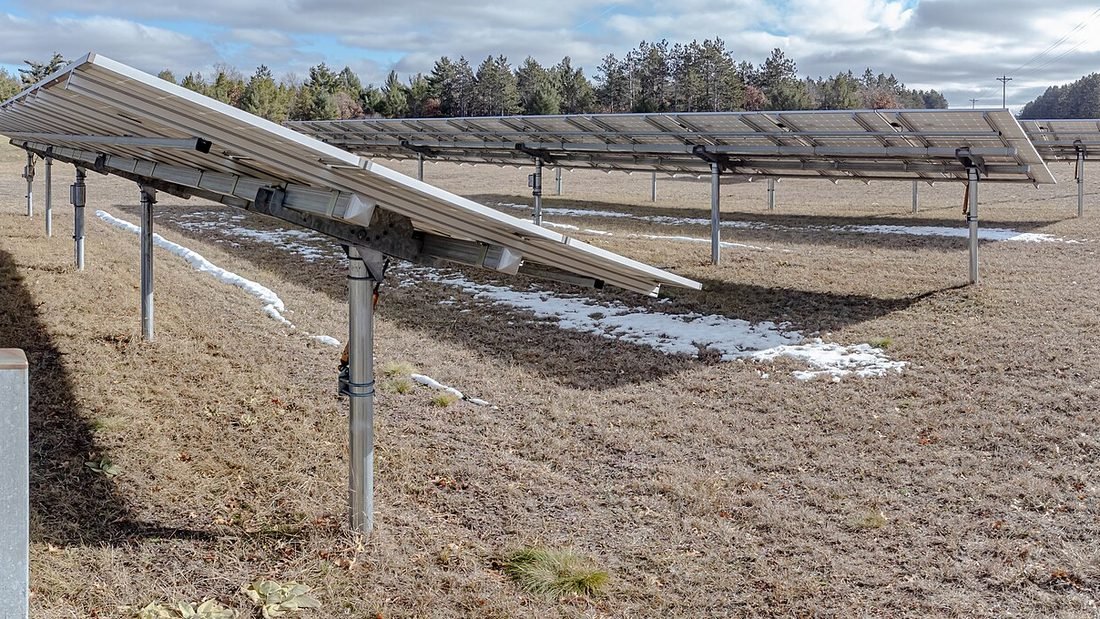
Image: Solar array 2 axis by Wikideas1, CC0, via Wikimedia Commons.
Every year, pre-monsoon storms sweep through Chhattisgarh, and every year some rooftop solar systems come through untouched while others lose panels. The difference is rarely luck. This guide explains how wind, hail and rain act on an array and what durable solar installations in Chhattisgarh have in common.
Quick answer: insist on a hot-dip galvanised structure sized for the site's wind load, proper anchoring, torqued fasteners and neat cable routing. Panels themselves are tested for hail and wind; the weak link is almost always the mounting.
An array behaves like a sail. Wind pushing under the panels creates uplift, and wind pushing over them creates downforce and drag. Corners and edges of a roof see the highest suction. Raised, tilted structures catch more wind than low-profile ones. The structure and foundations must resist uplift, not just carry the panels' weight.
| Element | Good practice | Common shortcut |
|---|---|---|
| Steel sections | Sized for site wind load and span | Thin sections that flex |
| Coating | Hot-dip galvanised, damage touched up | Light coating that rusts in a season |
| Foundations | Adequate concrete mass or chemical anchors into sound slab | Small blocks or shallow fixings |
| Bolts and clamps | Correct grade, torqued, lock washers | Hand-tight, mixed hardware |
| Bracing | Cross-bracing on longer frames | None |
| Module clamps | Manufacturer-approved positions and torque | Clamping at wrong points |
Modules are tested by firing ice balls at them under standard test procedures, and certified products are expected to withstand typical hail. Severe hail can still crack glass. If your area sees damaging hail, ask about glass thickness and check whether your insurance covers solar equipment.
Heavy monsoon rain tests seals, cable glands and roof waterproofing more than panels. Foundations should be sealed, cable entries drip-looped and the inverter enclosure rated for outdoor use. Make sure water can drain freely beneath and around the structure.
Ground-mounted arrays on farms and open plots face full wind without buildings to shelter them, so foundations and bracing matter even more. Tracker systems add moving parts that need stow positions in high winds. Ask whether the design includes a stow angle or fixed tilt, and how it was checked.
After a pre-monsoon squall, an inspection of two neighbouring homes found different results. House A had a 3 kW array on a thin galvanised frame with six small foundation blocks, bolts hand-tightened and cables lying loose; two panels had shifted and a cable was torn. House B had the same capacity on a heavier hot-dip galvanised structure with chemical anchors, torqued bolts and clipped cables; nothing moved. The panels were identical. The difference was Rs 10,000 to 15,000 of structure and fixings, a trivial sum next to the repair cost and downtime House A faced.
Insurers may ask whether the installation followed good practice. Keep the design basis, the commissioning report with torque and earthing records, and photographs of foundations before they were sealed. These make claims smoother. Ask your insurer whether solar equipment is covered for storm damage and whether the sum insured should be revised.
| Month | Task |
|---|---|
| April - May | Pre-monsoon structure, bolt, earthing and waterproofing inspection |
| June - September | Check after each major storm; clear drains and debris |
| October | Post-monsoon inspection for rust, moss and loosened fixings |
| December - February | Cleaning and a general check |
A storm is the cheapest inspection your system will ever get. To act on it, book a survey with a solar company in Raipur, ask how their solar installation in Raipur process works and compare them using the best solar company in Raipur questions. Our solar in Raipur overview and solar Raipur neighbourhood guide fill in the local detail. More articles are on the blog, and PM Surya Ghar Yojana in Raipur covers the scheme.
Yes, when the structure, fasteners and foundations are designed for the site's wind load. Failures usually come from thin steel, loose bolts or poor anchoring, not from the panels themselves.
Certified modules are tested against hail impact, and damage is uncommon. Large hail can still crack glass, so check your insurance cover.
The design should follow the wind-load requirements for your location in the relevant building standards. Ask the installer for the design basis in writing.
Look for moved panels, bent rails, loose bolts, cable damage and inverter faults. Photograph anything unusual and call your installer.
Lower tilt reduces wind lift but also changes yield and water run-off. The designer balances them for your roof.
Visit C-29, Sector 3, Devendra Nagar, Raipur, Chhattisgarh 492001, call 083051 31420 or send your details online for a free survey and a written quotation. Our solar installation in Raipur team replies the same working day.
A good solar company in Raipur survey comes first. Read about solar in Raipur, compare firms with our best solar company in Raipur questions and see how solar installation in Raipur works in your solar Raipur neighbourhood. Browse every article on the solar blog, or see PM Surya Ghar Yojana in Raipur and our solar services.
A pre-monsoon structure, fastener and earthing inspection with a written report.