
0%
Loading
Loading
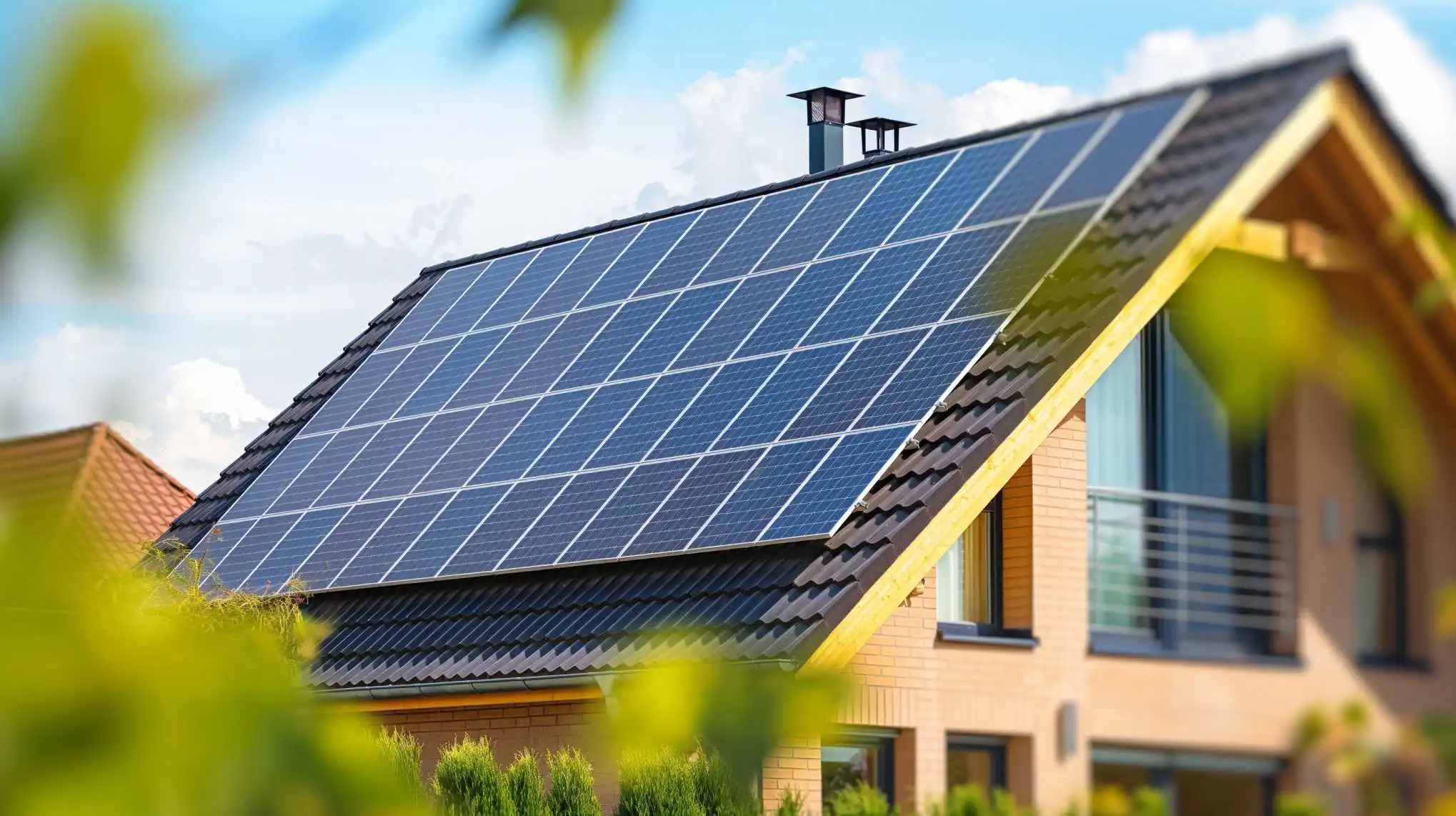
Everything Chhattisgarh farmers need to know about solar water pumps, PM KUSUM subsidy, pricing and dealers.
Chhattisgarh is one of India's most important agricultural states. With over 80% of the rural population dependent on farming and allied activities, reliable irrigation is not a luxury — it is a necessity. Yet thousands of farmers across the state still depend on expensive diesel pump sets or erratic grid electricity to water their crops. The result is rising input costs, unpredictable water supply and shrinking margins season after season.
This is exactly why the agricultural solar pump has emerged as a transformational technology for farmers in the region. A solar water pump in Raipur and across Chhattisgarh draws energy directly from the sun, eliminating fuel costs and grid dependency completely. When combined with generous central and state government subsidies — sometimes covering up to 90% of the total cost — the economics become impossible to ignore.
In this comprehensive guide, we cover everything a Chhattisgarh farmer needs to know: how solar pumps work, the different types available, government subsidy schemes like PM KUSUM Yojana, how to apply through CREDA, pricing across different HP ratings, and why choosing the right agricultural solar pump dealer in Chhattisgarh matters for long-term performance and support.
An agricultural solar water pump system converts sunlight into electricity using photovoltaic (PV) panels, which then powers a pump motor to draw water from a borewell, open well, river, pond or canal. The core components of a solar pump system include:
The system starts pumping as soon as the sun rises and delivers peak discharge during the brightest hours of the day. No battery storage is needed for daytime irrigation, which keeps the overall cost significantly lower. The average solar pump runs 6 to 8 hours daily in Chhattisgarh's climate, which receives approximately 5.0 to 5.5 peak sun hours per day — among the best in central India.
Choosing the right type of solar water pump in Raipur or anywhere in Chhattisgarh depends on your water source depth, discharge requirement and budget. Here is a breakdown of the main categories:
These pumps are installed inside a borewell and can lift water from depths of 30 metres to over 200 metres. They are ideal for the deep borewell conditions found in many parts of Chhattisgarh, particularly in Durg, Rajnandgaon, Bilaspur and Korba districts. Submersible pumps are available from 1 HP to 10 HP and above.
Surface pumps sit above the ground and draw water from open wells, ponds, rivers or canals where the suction depth is typically less than 10 metres. They are simpler to install and maintain. Farmers in the plains of Raipur, Dhamtari and Mahasamund often prefer surface pumps for paddy irrigation from canals.
For most farmers in Chhattisgarh, an AC submersible solar pump in the 3 HP to 5 HP range offers the best balance of performance, serviceability and subsidy eligibility.
The Pradhan Mantri Kisan Urja Suraksha evam Utthaan Mahabhiyan (PM KUSUM) is the Government of India's flagship scheme to solarise agriculture. It has three components, each targeting a different need:
Farmers, cooperatives and panchayats can set up solar power plants of 500 kW to 2 MW capacity on barren or fallow land. The electricity generated is sold to the DISCOM at a pre-fixed tariff, generating a secondary income stream for the farmer. The central government provides a subsidy and the state facilitates grid connectivity.
This is the most relevant component for individual farmers. Under Component B, the government provides a subsidy of up to 60% of the benchmark cost for installing standalone solar pumps of up to 7.5 HP capacity. The subsidy is split as follows:
For small and marginal farmers, SC/ST farmers, women farmers and farmers in north-eastern states, the state subsidy component can go up to 50%, bringing the total subsidy to 80% of the benchmark cost.
Farmers who already have a grid-connected electric pump can install solar panels on their land and use solar power to run the pump. Any surplus electricity is fed to the grid, and the farmer earns income from it. The subsidy structure is similar to Component B.
PM KUSUM has been a key driver in making Chhattisgarh one of the fastest-growing states for agricultural solar pump adoption. As a leading agricultural solar pump dealer in Chhattisgarh, Gupta Agro Solar helps farmers navigate every step of the KUSUM application and installation process.
In Chhattisgarh, the Chhattisgarh State Renewable Energy Development Agency (CREDA) is the nodal agency for implementing PM KUSUM and other solar pump subsidy programmes. Here is the step-by-step process to apply:
Gupta Agro Solar is an empanelled vendor with CREDA and provides end-to-end support — from filling the online application to final commissioning and subsidy claim. Contact us to get started with your application today.
The table below compares the three most common irrigation pump options available to farmers in Chhattisgarh:
| Parameter | Solar Pump | Diesel Pump | Electric Pump |
|---|---|---|---|
| Upfront Cost (5 HP) | Rs 2.5-3.5 lakh (before subsidy) | Rs 25,000-40,000 | Rs 15,000-30,000 |
| Cost After Subsidy | Rs 50,000-1.4 lakh | No subsidy | No subsidy on pump |
| Annual Running Cost | Nil (sunlight is free) | Rs 40,000-80,000/year | Rs 15,000-30,000/year |
| Maintenance Cost | Rs 2,000-5,000/year | Rs 8,000-15,000/year | Rs 3,000-8,000/year |
| Lifespan | 25+ years (panels); 10-15 years (pump) | 5-8 years | 8-12 years |
| Fuel/Grid Dependency | None | Diesel (rising prices) | Grid (erratic supply in rural areas) |
| Carbon Emissions | Zero | High | Moderate (coal-based grid) |
| Reliability | Very High (sunlight predictable) | High (if diesel available) | Low (power cuts common) |
Over a 10-year period, a solar pump saves a farmer between Rs 4 lakh to Rs 8 lakh compared to a diesel pump set — even after accounting for the initial investment. This makes it the most economical long-term choice for irrigation in Chhattisgarh. Visit our solar water pump service page for detailed product specifications.
The HP (horsepower) rating of a solar pump determines how much water it can lift and from what depth. Selecting the correct capacity depends on your farm size, crop water requirement, borewell depth and water table level. Here is a general guide for Chhattisgarh conditions:
| Pump HP | Suitable For | Approx. Daily Discharge | Approx. Cost Before Subsidy |
|---|---|---|---|
| 1 HP | Kitchen garden, small plot up to 1 acre | 30,000-50,000 litres | Rs 1.0-1.3 lakh |
| 2 HP | 1-2 acre farm, shallow borewell | 60,000-90,000 litres | Rs 1.5-1.8 lakh |
| 3 HP | 2-3 acre farm, medium depth borewell | 80,000-1,20,000 litres | Rs 2.0-2.5 lakh |
| 5 HP | 3-5 acre farm, deep borewell up to 100m | 1,20,000-1,80,000 litres | Rs 2.8-3.5 lakh |
| 7.5 HP | 5-8 acre farm, deep borewell up to 150m | 1,80,000-2,50,000 litres | Rs 4.0-5.0 lakh |
| 10 HP | 8+ acre farm or community irrigation | 2,50,000-3,50,000 litres | Rs 5.5-7.0 lakh |
After subsidy, the farmer's contribution can be as low as Rs 20,000 for a 1 HP pump and Rs 70,000-1.4 lakh for a 5 HP pump depending on category and scheme. The 3 HP and 5 HP models are the most popular among Chhattisgarh farmers due to the average borewell depth of 60-120 metres in the state.
Switching to a solar pump delivers measurable, long-term advantages for farmers:
The impact of solar pumps on farmer income in Chhattisgarh has been well documented by CREDA and independent surveys. Key statistics include:
These numbers demonstrate that the agricultural solar pump is not just an environmental upgrade — it is a direct path to higher farm profitability. To learn more about government incentives, visit our PM Surya Ghar Yojana page.
Selecting the right dealer is just as important as selecting the right pump. A poorly sized system, low-quality panels or improper installation can result in underperformance, frequent breakdowns and subsidy rejection. Here is why farmers across Raipur, Durg, Bilaspur, Korba and Rajnandgaon trust Gupta Agro Solar:
Whether you need a 2 HP surface pump for your paddy field or a 10 HP submersible system for a deep borewell, Gupta Agro Solar is the solar water pump dealer in Raipur that delivers the right system, at the right price, with the right support. Browse our full range of solar services or get in touch for a free consultation.
Under PM KUSUM the subsidy can reach around 60 per cent of project cost, combining central and state support, with the farmer contributing the balance. Exact rates vary by component and scheme year, so confirm current figures at the time of application. Gupta Agro Solar assists with the full application.
As a rough guide, a 3 HP pump suits 2 to 3 acres, 5 HP suits 3 to 5 acres, and 7.5 HP suits 5 to 8 acres. The correct size also depends on borewell depth, water table and the crop being irrigated, which is why we survey the site before quoting.
Yes. Output drops on heavily overcast monsoon days, but irrigation demand is also lowest then because of rainfall. Winter output in Chhattisgarh is strong, since panels are more efficient in cooler air, which suits the rabi season well.
The solar panels carry a 25-year performance warranty. The pump and controller typically last 10 to 15 years with routine servicing, after which only those components need replacing rather than the whole system.
Yes. We are an agricultural solar pump dealer serving farms across Chhattisgarh, including Rajnandgaon, Durg, Dhamtari, Bilaspur and Korba, with scheduled service routes rather than ad-hoc visits.
The agricultural solar pump is no longer an experimental technology — it is a proven, government-backed solution that is transforming farming economics across Chhattisgarh. With generous subsidies under PM KUSUM Yojana, favourable solar irradiance and rapidly falling equipment costs, there has never been a better time for Chhattisgarh farmers to go solar.
If you are a farmer looking for a reliable agricultural solar pump dealer in Chhattisgarh, or if you simply want to understand your options and subsidy eligibility, Gupta Agro Solar is here to help. Call us, send a WhatsApp message or visit our office in Raipur — and take the first step toward free, reliable irrigation for your farm.
Get expert guidance on the right solar pump, subsidy eligibility and hassle-free installation from Gupta Agro Solar — your trusted agricultural solar pump dealer in Chhattisgarh.
Call Now Get Free Quote