
0%

A few minutes a month keeps your system near its design output. Here is exactly what to check and when.
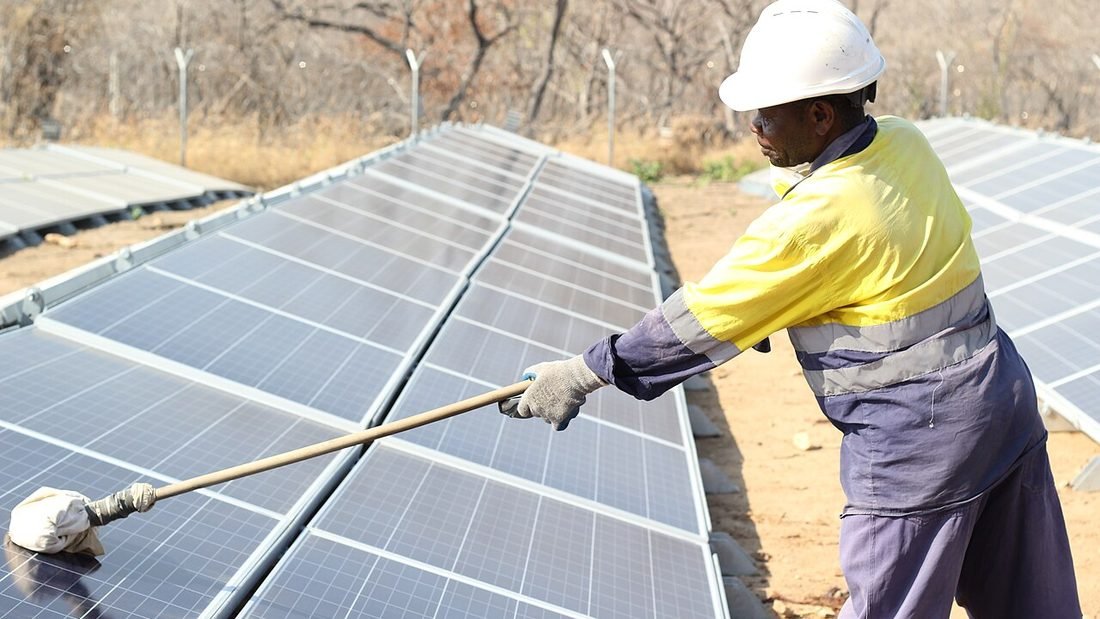
Image: Cleaning solar panel by Deo photographer, CC BY-SA 4.0, via Wikimedia Commons.
Solar systems are low maintenance, not no maintenance. A few minutes of attention each month, plus a yearly professional check, protects a system that you expect to run for 25 years. This is the checklist we give solar in Raipur customers, with the tasks that matter in dusty, hot, stormy local conditions.
Quick answer: check the app monthly, clean panels every two to four weeks in the dry season, inspect cables and the inverter quarterly and book a professional inspection once a year, including earthing and structure.
| Frequency | Task | Who |
|---|---|---|
| Daily or weekly | Glance at the app: does generation look normal for the weather? | You |
| Every 2 - 4 weeks (dry season) | Clean panels with soft brush and clean water | You or cleaner |
| Monthly | Record units generated and units imported and exported | You |
| Quarterly | Visual check of cables, clips, inverter vents and enclosure seals | You or technician |
| Before monsoon | Check structure, fasteners, earthing and surge protection | Technician |
| After a severe storm | Check inverter display, breakers and surge-protection indicators | You, then technician if needed |
| Yearly | Professional inspection, thermal or electrical tests, performance review | Technician |
Our detailed panel cleaning guide explains how much dust costs you in Raipur and how monsoon rain affects cleaning.
Do not open electrical enclosures yourself. Call a qualified technician for anything beyond a visual check. Our inverter guide explains why inverters fail and what to watch for.
Before the monsoon, check that the structure is firm, bolts are tight, galvanising is intact and no foundation has cracked or leaked. After storms, look for moved panels or bent rails. Check roof drainage near foundations, and clear leaves and debris. Rust at a fixing point is an early warning that should be treated rather than ignored.
Have a technician inspect earthing connections and measure earth resistance at least yearly, particularly before the pre-monsoon storm season. Check the status indicators on surge-protection devices and replace cartridges that show they have operated. Lightning damage is far cheaper to prevent than repair; see lightning protection for rooftop solar in Chhattisgarh.
Keep a simple log: date, units generated, units imported and exported, cleaning date and any fault code. A log makes it easy to spot a decline over months, to prove a problem to the installer and to support a warranty claim. A photograph of your meter on the first of each month works well.
A maintenance contract is most useful for large systems, hard-to-reach roofs and owners who prefer a fixed routine. A good contract specifies cleaning frequency, inspection items, a response time for breakdowns and a written report. Read our overview of solar warranty and maintenance and our maintenance and AMC service.
| Date | Units generated | Units imported | Units exported | Cleaned? | Fault codes or notes |
|---|---|---|---|---|---|
| 1 Nov | 380 | 120 | 95 | Yes | None |
| 1 Dec | 365 | 110 | 100 | No | None |
| 1 Jan | 350 | 140 | 75 | Yes | Brief trip on 12 Jan, cleared |
The numbers above are only an illustration of what to record. A column for notes lets you capture anything unusual, and a quick glance across months shows whether output is holding up. A fall of more than about 10 per cent compared with the same month last year, with similar weather, is a reason to look for dust, shade or a fault.
Before the monsoon (May): inspect structure and fasteners, tighten loose bolts, check waterproofing at foundations, test earthing and surge protection, trim trees and clear drains. After the monsoon (October): check for moss or algae on panel edges, look for corrosion on fixings, inspect cable clips and glands for UV or water damage and compare generation with the previous October. These two visits catch most seasonal problems.
| Option | Pros | Cons |
|---|---|---|
| Clean it yourself | Free, flexible, quick for small roofs | Safety risk on high or sloped roofs; may miss hard-to-reach panels |
| Hire a local cleaner | Low cost, regular schedule | Quality and safety vary; supervise first visits |
| Use an AMC from your installer | Includes inspection and report, accountable provider | Costs more; check scope and frequency |
For homes with easy access, a quick wash by the owner or a trusted cleaner is usually enough, topped up with a yearly professional inspection. For larger or high-roof systems, a contract with clear scope is safer.
In a dry March, a layer of dust can cost 15 to 25 per cent of output. A good wash on a Saturday morning can restore most of it by the afternoon. The first sunny day after cleaning is a useful test: compare generation with a similar earlier day. If the gain is small, dust was not your problem and a technician should look for shade, a fault or inverter settings.
Track the effect over a season. You may discover that a fortnightly wash in April and May pays for itself in extra units many times over.
These small habits take minutes and often catch problems weeks before they would show up on a bill.
Share this checklist with whoever cleans or services your system so that everyone follows the same routine.
Learn the basics in solar in Raipur and ask a solar company in Raipur about maintenance when you buy. Our rooftop solar installation in Raipur team offers service plans, and the best solar installer in Raipur checklist includes after-sales questions. Check PM Surya Ghar Yojana in Raipur if you are still planning. Owners elsewhere can read solar in Chhattisgarh, how to choose a solar company in Chhattisgarh, PM Surya Ghar Yojana in Chhattisgarh, solar subsidy apply online in Chhattisgarh and rooftop solar installation in Chhattisgarh.
In the dry season, every two to four weeks is a good routine because dust builds quickly. During the monsoon, rain cleans the panels, but check for bird droppings and shading growth.
Yes, if you can reach them safely from a secure position. Use soft brushes or microfibre and clean water, avoid abrasives and never clean hot panels in direct sun. Do not climb on a wet or sloping roof.
Look at the display or app for fault codes and compare today's generation with a typical sunny day. Listen for unusual noise and check that vents are clear.
It is not mandatory, but it ensures scheduled cleaning and inspection. It is especially valuable for larger systems and for owners who cannot safely reach their roof.
If generation drops sharply on sunny days, the inverter shows repeated faults, you notice burnt smells, damaged cables, cracked panels or water ingress, or after a severe storm.
Our maintenance and AMC service covers cleaning, electrical checks and performance review for systems we installed and for those installed by others. Visit C-29, Sector 3, Devendra Nagar, Raipur, Chhattisgarh 492001, call 083051 31420 or request a service visit.
Next, talk to a solar company in Raipur about solar installation in Raipur. Our solar in Raipur guide explains costs, the solar Raipur guide covers your area and the best solar company in Raipur checklist helps you choose. Browse every article on the solar blog, or see PM Surya Ghar Yojana in Raipur and our solar services.
Scheduled cleaning, inspection and performance review with a written report from a Raipur solar service team.