
0%

Pre-monsoon storms hit Chhattisgarh hard. Proper earthing and surge protection decide whether your inverter survives them.
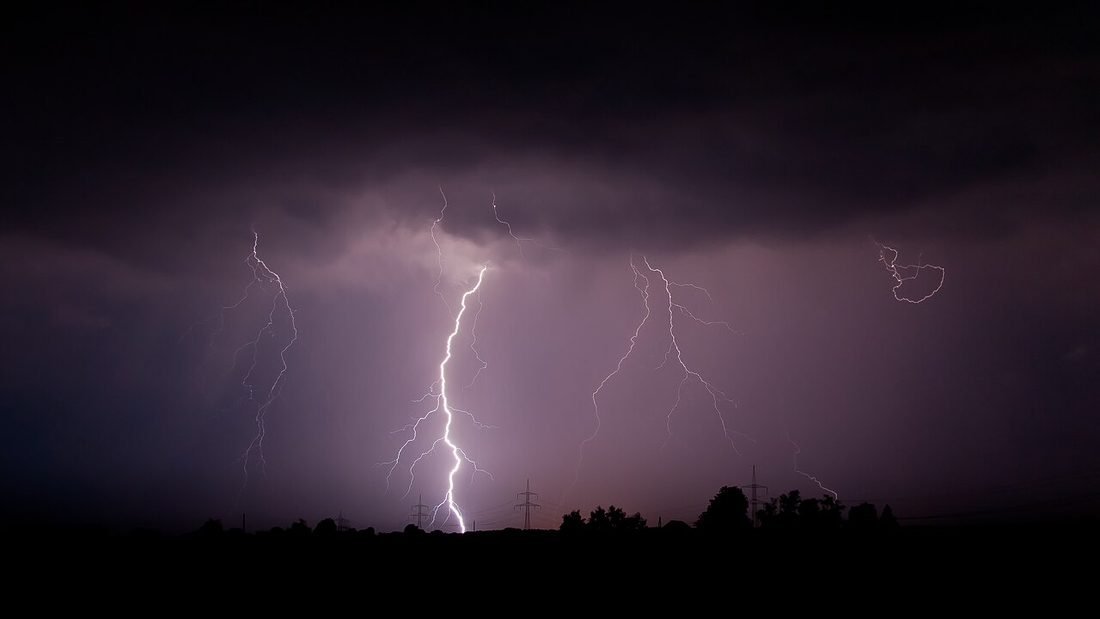
Image: Lightning Pritzerbe 01 (MK) by Mathias Krumbholz, CC BY-SA 3.0, via Wikimedia Commons.
Chhattisgarh sees heavy pre-monsoon and monsoon thunderstorms, and a solar array is a collection of metal and cable on top of the tallest surface of a building. That is why lightning protection for rooftop solar in Chhattisgarh is not a luxury. A well-protected system rides out storms for years. A poorly protected one can lose an inverter, damage panels and, in the worst case, endanger people. This guide explains the protection layers and the questions to ask your installer.
Quick answer: insist on proper earthing of the array frame and inverter, surge protection devices on the DC and AC sides, equipotential bonding and, where the design requires it, a lightning arrester, all documented with measured earth resistance.
| Layer | What it does | Where it sits |
|---|---|---|
| Earthing of array frame | Gives fault and surge current a safe path to ground | Structure and module frames bonded to earth pits |
| Inverter earthing | Protects the inverter and users from fault voltage | Inverter chassis connected to earth |
| Lightning arrester (LA) | Intercepts direct strikes where risk assessment calls for it | Above the array on an air terminal, with its own earth |
| DC surge protection (SPD) | Clamps surges on panel cables before they reach the inverter | At the DC input of the inverter |
| AC surge protection (SPD) | Clamps surges arriving from the grid side | At the AC output and main panel |
| Equipotential bonding | Keeps all metal parts at the same potential | Between structure, earth pits and building steel |
Lightning protection design is covered by international standards such as the IEC 62305 series, and by building and electrical codes. A competent designer decides which layers a given building needs based on its height, exposure and the value of what it protects.
Earthing is cheap compared with the equipment it protects, which is why quotes that leave it out are false economy. A proper installation uses earth pits with adequate electrodes and treatment, copper or GI strips sized for fault current and clean, tight connections. Earth resistance is measured after installation and recorded in the commissioning report. Ask for the figure, and ask the designer what target value applies to your system.
Short, tidy cable runs reduce induced surges. Keep positive and negative DC cables close together to limit loop area, avoid running cables near down-conductors and separate DC and AC cables where practical. Secure cables against wind and UV exposure. These details cost little and make a real difference to survival during a storm.
Check the inverter display and app for fault codes, look for tripped breakers and inspect SPD indicators. If something is off, switch the system off from the isolators as taught during commissioning and call your installer rather than resetting repeatedly. If the damage is storm-related, your installer can advise whether it is a warranty or insurance matter. See our warranty and maintenance guide for how the warranties interact.
Earth resistance measures how easily current can flow into the ground through an earth electrode. A lower value means surge and fault current disperse more readily. Soil type, moisture, electrode depth and treatment affect it. In dry months, resistance can rise, which is why earth pits are maintained and sometimes watered. Ask your installer for the measured value at commissioning, the target value used in design and a plan to re-test annually, preferably before the pre-monsoon storm season.
| System | Typical protection approach |
|---|---|
| Home rooftop (RCC roof) | Earthing of structure and inverter, DC and AC SPDs, bonding; LA depending on exposure and building height |
| Sheet-roof industrial plant | Roof-wide bonding, multiple earth pits, SPDs at inverters and main panel, lightning protection design for the building |
| Ground-mounted farm system | Grid of earthing for structures, arresters, SPDs and careful cable routing |
| Solar pump | Earthing of array and controller, SPD on the DC side and a good earth for the pump motor |
Insurers may ask about earthing and surge protection when assessing a claim. Keep the commissioning report, the earth-resistance test record, photographs of earth pits before they were covered and the datasheets of SPDs. If damage occurs, a complete record helps you show that the system was installed properly and maintained. Ask your insurer whether your property or equipment policy covers lightning damage to solar systems and what protection standards it expects.
Every May, before the storms begin, book a short inspection. A technician should check earth pit connections for tightness and corrosion, measure earth resistance, inspect SPD indicators and replace spent cartridges, verify bonding continuity between structure, cable trays and the building, and confirm the inverter enclosure is sealed. The visit takes a few hours and costs little compared with an inverter or panel replacement. Combine it with the structural and fastener check recommended in our solar maintenance checklist.
A serious installer answers these quickly and attaches the test report to the commissioning file. Hesitation or vagueness is a reason to look elsewhere.
Our guide to rooftop solar installation in Chhattisgarh explains structure and wind loads alongside lightning protection. A reliable solar company in Chhattisgarh documents earthing at commissioning, and the solar inverter guide explains why inverters fail. For the wider picture, read solar in Chhattisgarh and PM Surya Ghar Yojana in Chhattisgarh, and plan your application with solar subsidy apply online in Chhattisgarh. In the capital, see solar in Raipur, ask a solar company in Raipur for an earthing inspection, compare firms with the best solar installer in Raipur checklist, learn about PM Surya Ghar Yojana in Raipur and book rooftop solar installation in Raipur.
Panels do not attract lightning, but they sit at the highest point of a roof and are connected to long cables, so a nearby strike can induce damaging surges. Protection limits that risk.
A combination of proper earthing of the array frame and inverter, a lightning arrester where the design calls for one, surge protection devices on the DC and AC sides and equipotential bonding of metal parts.
It should be. Earthing is a safety item, not an option. If a quote omits earthing or surge protection, ask why and expect to pay for it separately.
Some home or equipment policies cover it, subject to terms. Check your policy and ask your installer which protection devices the insurer expects.
Stay away from the roof and array, do not touch metal parts and do not try to switch the inverter off on the roof. After the storm, check the inverter display and call your installer if there are fault codes.
We test and document earthing on every system we install and inspect systems installed by others. Visit C-29, Sector 3, Devendra Nagar, Raipur, Chhattisgarh 492001, call 083051 31420 or book an inspection.
A good solar company in Raipur survey comes first. Read about solar in Raipur, compare firms with our best solar company in Raipur questions and see how solar installation in Raipur works in your solar Raipur neighbourhood. Browse every article on the solar blog, or see PM Surya Ghar Yojana in Raipur and our solar services.
Earthing, arrester and surge-protection inspection with a written report, from a Raipur solar team.