
0%

Different parts of the city mean different roofs, shade and loads. Here is what to check in your neighbourhood.
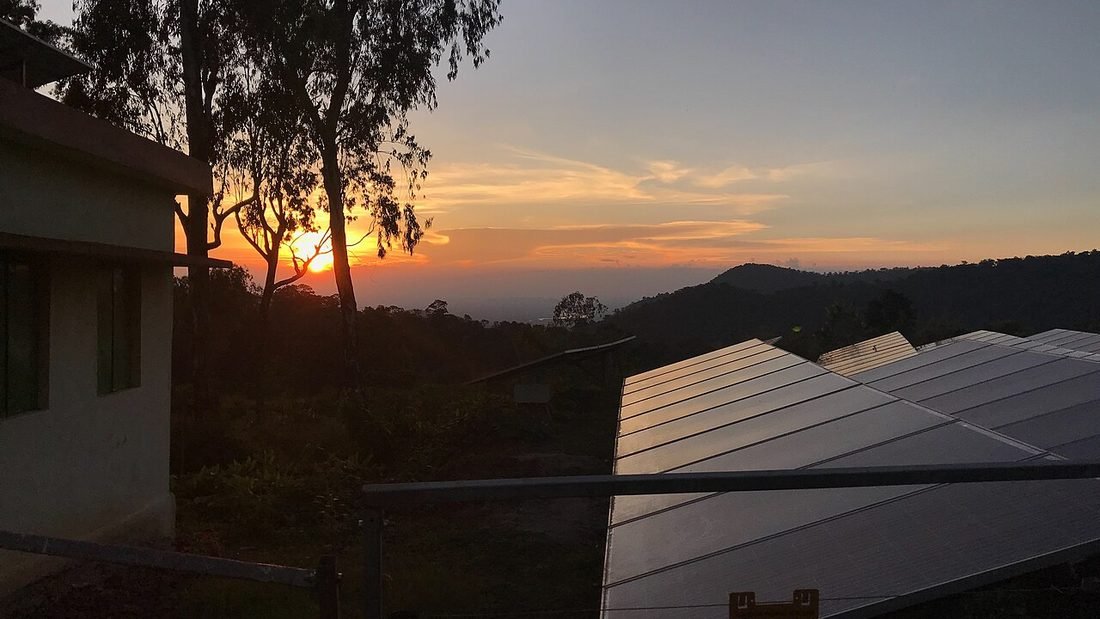
Image: Solar panels At Maarigudi Podu in BR Hills by Prashanthns, CC BY-SA 4.0, via Wikimedia Commons.
Raipur is a city of many neighbourhoods and many roof types. A bungalow in Devendra Nagar, a row house in Shankar Nagar, a flat in Telibandha, a shop in Pandri and a shed in an industrial area all need different thinking, even though the sun is the same. This guide to solar Raipur by locality explains what to check on your roof, what to expect from your neighbourhood and how installation differs from area to area.
Quick answer: generation is similar everywhere in the city, about 1,400 to 1,500 units per kW per year. Roof type, shade, sanctioned load and approvals vary by area, so a survey of your actual roof matters more than your postcode.
| Area type | Typical roofs and loads | What to check |
|---|---|---|
| Planned sectors and newer colonies (for example Devendra Nagar, Avanti Vihar, Shankar Nagar) | RCC flat roofs, larger plots, higher air-conditioner use | Parapet height, water tank position, future floors |
| Dense older colonies and market areas (for example Pandri, Gol Bazaar surroundings) | Closely packed buildings, shared walls, shops below homes | Shade from neighbours, narrow access, shared roofs |
| Apartment belts (for example Telibandha, Mowa, Tatibandh, Kota) | Multi-storey flats with a common terrace | Society approval, RWA subsidy, structural load |
| Naya Raipur and new developments | Modern buildings, wide roads, some with solar-ready design | Building rules, roof drawings, any society guidelines |
| Industrial areas (for example Urla, Siltara, Bhanpuri) | Large sheet-metal or RCC sheds with heavy daytime load | Structure, dust, electrical integration |
| Rural belts (for example Abhanpur, Arang, Tilda) | Farmhouses, pumps, outbuildings | Pump needs, shed roofs, grid reliability |
These descriptions are general patterns, not rules. Your own roof matters more than the typical roof of your area.
Houses with flat RCC roofs and decent shadow-free area are the easiest solar projects: 3 kW to 5 kW systems are common. The main design decisions are where to place the array relative to the water tank and parapet, and how to leave space for a future floor. If you plan to add a storey, discuss it with the installer before design. Read solar for a new house in Raipur and water tank shade layout.
Where buildings touch, shade is the central question. A neighbour's taller building or a mobile tower can shade part of the roof at certain hours. A survey with a shading analysis shows how many panels can be placed where without loss. Shops on the ground floor with a homeowner above need clear agreement about roof use. See solar for shops and MSMEs.
In flat-heavy areas, the roof is common. A society can pass a general-body resolution, install a shared plant for lifts, pumps and lighting and claim the RWA subsidy of Rs 18,000 per kW. The step-by-step process is in our guide to solar for apartments and housing societies.
Factories, godowns and workshops have large roofs and heavy daytime loads, which makes payback attractive. Design needs structural checks, dust planning and approvals suited to higher capacity. See solar power plant for a factory in Raipur and industrial solar EPC in Chhattisgarh.
Farmhouses and pump sets around Abhanpur, Arang and Tilda often combine a rooftop plant with a solar pump. Shed roofs need the checks in our guide to solar on sheet roofs, and pump sizing is covered in solar water pump in Raipur.
Raipur is compact enough that a company with a local office can reach most areas quickly. Ask any installer how quickly a fault call is attended in your locality and whether their crews are employed or subcontracted. Our office is at Devendra Nagar, and we schedule survey and service visits by area to keep response times short.
A homeowner in a planned sector has a 120 square metre flat roof with a tank on the north side and a stair cover on the east. Usable shadow-free area is about 70 square metres, so a 5 kW system fits comfortably, with room for expansion. A homeowner in a dense older colony has a 60 square metre roof, a taller neighbouring building to the south-west and a tank near the middle. Usable area is about 28 square metres, so a 3 kW system fits only if the tank is shifted or the array is split around it. Same sun, same price per kW, different designs. A survey is what reveals the difference.
Raipur is compact, so most surveys and service visits are quick. We group visits by area so crews and engineers reach you promptly, and we confirm slots by phone the day before. For installations, a supervisor visits on day one and day four to check the layout and the commissioning tests. If your area has particular access issues, such as narrow lanes or shared stairs, tell us at the survey so that deliveries and cranes are planned properly.
Wherever your home sits, the city's climate sets some common requirements. Pre-monsoon storms call for properly engineered structures and fasteners. A dry March brings dust, so panels should be reachable for cleaning. Hot afternoons argue for shaded, ventilated inverter locations. Humid monsoon weeks stress seals and cable glands. These are not neighbourhood questions but city questions, and a good installer designs for all four every time.
Your roof, not your postcode, decides the design. The next step is a free survey. Speak to a solar company in Raipur that handles solar installation in Raipur from design to commissioning, and read the best solar company in Raipur checklist before you sign anything. For background, see solar in Raipur and the solar Raipur locality guide, explore the full solar blog, and check PM Surya Ghar Yojana in Raipur for subsidy slabs.
Sunshine is similar across the city, so generation per kW is about 1,400 to 1,500 units a year everywhere. What changes is roof type, shade from neighbouring buildings and trees, sanctioned load and the CSPDCL office that handles your file.
We serve homes, shops, schools, hospitals and factories across Raipur, including Devendra Nagar, Shankar Nagar, Telibandha, Pandri, Mowa, Tatibandh, Kota, Avanti Vihar and Naya Raipur, plus the industrial areas and nearby towns.
Often yes, but shade and roof access need careful design. A survey checks neighbouring buildings, tanks and parapets and decides capacity from the real shadow-free area.
Apartments usually have a shared roof. A housing society can claim the RWA subsidy for common-area solar. Individual flat owners need roof rights.
Yes. Large sheds need structural checks, dust management and electrical integration with factory loads. Our industrial team handles these projects.
Visit C-29, Sector 3, Devendra Nagar, Raipur, Chhattisgarh 492001, call 083051 31420 or send your details online for a free survey and a written quotation. Our solar installation in Raipur team replies the same working day.
A good solar company in Raipur survey comes first. Read about solar in Raipur, compare firms with our best solar company in Raipur questions and see how solar installation in Raipur works in your solar Raipur neighbourhood. Browse every article on the solar blog, or see PM Surya Ghar Yojana in Raipur and our solar services.
Free site survey in your part of Raipur with a shading analysis and a written quotation.