
0%

Find your bill on the chart, read off the system size, then check it against your own twelve months of data.
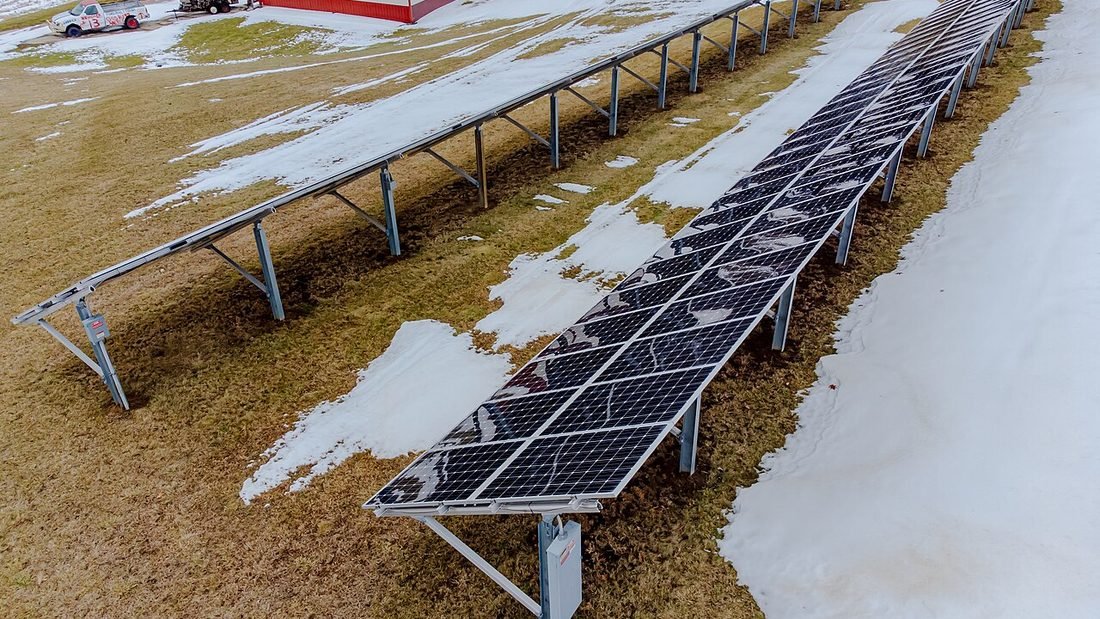
Image: Solar array-3 by Wikideas1, CC0, via Wikimedia Commons.
"I pay Rs 3,000 a month. How big a system do I need?" is the most common first question we hear. The honest answer starts with units, not rupees, but a chart helps you get close in a minute. This guide gives a bill-to-size chart for Raipur, explains how to refine it and lists the traps that make a quick estimate wrong.
Quick answer: a Rs 3,000 monthly bill usually points to about 3 kW; Rs 5,000 to about 5 kW; Rs 1,500 to about 2 kW. The chart below covers the full range.
| Typical monthly bill | Approx. monthly units | System size | Panels at 540 Wp | Roof area |
|---|---|---|---|---|
| Rs 700 - 1,000 | 100 - 150 | 1 kW | 2 | 10 sq m |
| Rs 1,500 - 2,200 | 200 - 270 | 2 kW | 4 | 20 sq m |
| Rs 2,500 - 3,500 | 320 - 400 | 3 kW | 6 | 30 sq m |
| Rs 3,500 - 4,500 | 420 - 540 | 4 kW | 8 | 40 sq m |
| Rs 4,000 - 5,500 | 500 - 675 | 5 kW | 10 | 50 sq m |
| Rs 8,000 - 11,000 | 1,000 - 1,350 | 10 kW | 19 - 20 | 100 sq m |
The ranges are indicative. They are consistent with a generation of about 1,400 to 1,500 units per kW per year in Raipur and with domestic tariffs at the time of writing. Because bills depend on slabs, fixed charges and duties, treat the chart as a starting point and refine it with units.
Rupees combine energy charges, fixed charges, duty and sometimes arrears, and slabs make the cost per unit rise as you use more. Two homes paying Rs 3,000 can use different units. Solar produces units, so units are the right currency. Collect the units from each of your last twelve bills, add them and divide by 12 for the monthly average.
That tells you that a 3 kW system, or six 540 Wp panels, covers the average. See how many solar panels a house needs for the panel count.
| Season | Typical effect on your bill | Effect on solar |
|---|---|---|
| March - June | Highest, air conditioners running | Highest generation too; surplus partly offsets |
| July - September | Medium, humid and cloudy | Lowest generation; imports rise |
| October - February | Lowest, fans and lights | Good generation; surplus builds credit |
Net metering lets you carry surplus from winter to summer, so annual averages are the right basis. You do not need panels for the single peak month.
| Household | Monthly units (12-month average) | Size | Why |
|---|---|---|---|
| Retired couple, fans and refrigerator | 140 | 1 - 2 kW | Small load, high subsidy per kW |
| Family of four, two air conditioners in summer | 420 | 3 kW to 4 kW | Covers most of the bill; check roof and load |
| Large home, four air conditioners, pump | 700 | 5 kW to 6 kW | Removes most of the bill; subsidy capped |
| Home with EV and three air conditioners | 850 | 6 kW to 8 kW | Vehicle adds units; confirm sanctioned load |
The chart is less reliable if your bills contain arrears, estimated readings, a shared meter or a recent change in household size. In those cases, ask your installer to work from meter readings and a list of appliances instead. If your roof is small or heavily shaded, the answer is limited by area, not by bills.
Domestic tariffs rise in slabs, so the average cost per unit increases as consumption grows. A home that uses 400 units pays more than twice as much as a home that uses 200 units, not twice. That means the bill-to-size ratio is not linear: doubling your bill does not double the system you need, because the extra rupees are partly the effect of higher slabs. This is why units, not rupees, are the right measure, and why the chart above uses ranges rather than a single number.
After you pick a size, calculate payback. For a typical 3 kW home, net cost of about Rs 87,000 to 1.12 lakh and annual saving of Rs 29,000 to 36,000 give three to four years. If an installer's size gives a payback far outside such ranges for your consumption, ask for the assumptions. See how to calculate solar payback in Raipur.
Use the chart to start the conversation and your twelve months of units to finish it. To act on it, book a survey with a solar company in Raipur, ask how their solar installation in Raipur process works and compare them using the best solar company in Raipur questions. Our solar in Raipur overview and solar Raipur neighbourhood guide fill in the local detail. More articles are on the blog, and PM Surya Ghar Yojana in Raipur covers the scheme.
Roughly 3 kW in Raipur, which generates about 360 to 400 units a month. Check the units on your bill, because the same rupee amount can mean different units in different slabs.
Units. Rupees depend on slabs and charges, while units reflect energy use directly. Use twelve months of units and convert to kW with about 4.0 to 4.5 units per kW per day.
Average twelve months. Net metering banks surplus from low months for high months, so the annual average is the right design basis.
Size for the average and let net metering carry surplus between months. Sizing for the highest month leaves you oversized for most of the year.
Find a bill that lists units, compute rupees per unit and apply that ratio. Better still, ask your installer to read units from your last twelve bills.
Visit C-29, Sector 3, Devendra Nagar, Raipur, Chhattisgarh 492001, call 083051 31420 or send your details online for a free survey and a written quotation. Our solar installation in Raipur team replies the same working day.
A good solar company in Raipur survey comes first. Read about solar in Raipur, compare firms with our best solar company in Raipur questions and see how solar installation in Raipur works in your solar Raipur neighbourhood. Browse every article on the solar blog, or see PM Surya Ghar Yojana in Raipur and our solar services.
We convert your twelve bills into units, kW, panel count and payback in a short written note.