
0%

The cheapest solar product most Raipur homes can buy, and the one with the fewest things to go wrong.
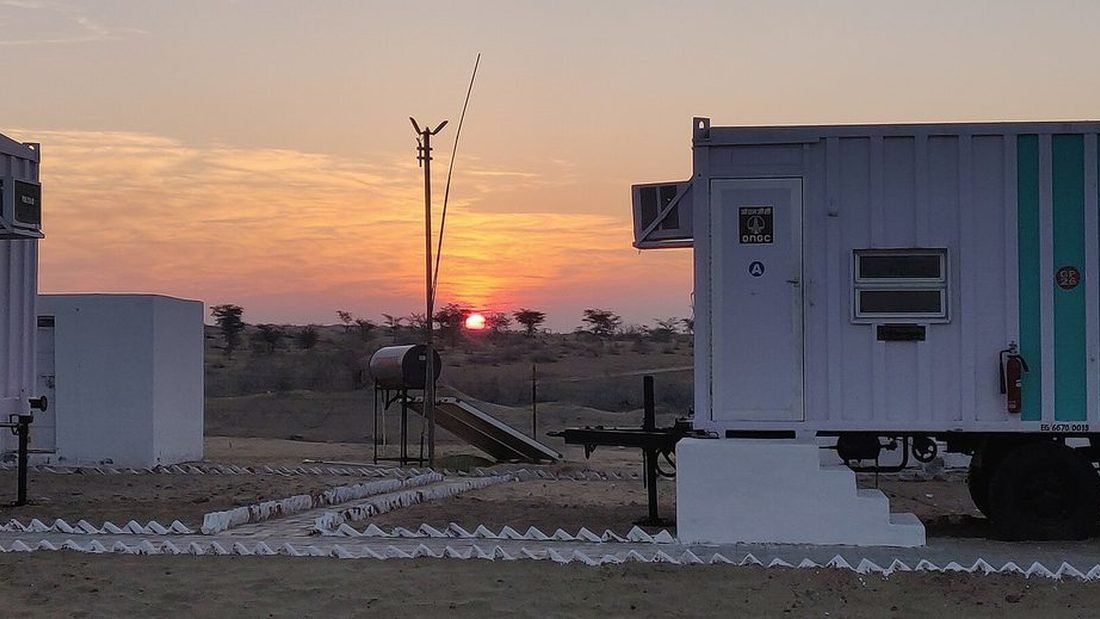
Image: Solar water heater in Thar desert by Ashishr.iitkgp, CC BY-SA 4.0, via Wikimedia Commons.
Rooftop solar gets the attention, but for a lot of Raipur households the quickest sensible entry into solar is far simpler: stop using a 2 kW electric geyser for four months of the year.
A solar water heater in Raipur costs a fraction of a PV system, installs in a morning, and has almost nothing that can break. This guide covers sizing, the two collector types, and the local conditions that actually affect performance here.
A 2 kW storage geyser running roughly two hours a day through Raipur's cool stretch from November to February consumes about 4 units daily. Across a 120-day season that is close to 480 units.
At prevailing CSPDCL domestic rates, that is a meaningful annual cost for hot water alone - and many households run the geyser well beyond those four months. A solar water heater removes nearly all of it.
| System | Suits | Installed Cost | Annual Saving | Payback |
|---|---|---|---|---|
| 100 LPD | Family of 4 | Rs 18,000 - 25,000 | Rs 5,000 - 7,000 | 3 - 4 years |
| 200 LPD | 6 - 8 people | Rs 28,000 - 40,000 | Rs 9,000 - 13,000 | 3 - 4 years |
| 300 LPD | Joint family, guest house | Rs 40,000 - 55,000 | Rs 14,000 - 19,000 | 3 - 4 years |
| 500 LPD | Hostel, small hotel | Rs 55,000 - 80,000 | Rs 23,000 - 32,000 | 2.5 - 3.5 years |
Payback of three to four years on a system that lasts fifteen to twenty is a straightforward proposition - and unlike a PV array, it needs no net meter, no CSPDCL approval and no subsidy paperwork.
Solar water heaters are rated in LPD - litres per day of hot water at around 60 degrees. The rule of thumb is 25 litres per person per day for bathing.
Oversizing is the common error. An oversized tank holds more water than you draw, so it never fully cycles, and on cloudy days a larger volume takes longer to reach temperature. Size to actual daily use.
| Factor | Evacuated Tube (ETC) | Flat Plate (FPC) |
|---|---|---|
| Cost | Lower | Higher |
| Heat-up speed | Faster | Slower |
| Cold-weather performance | Better | Good |
| Hail resistance | Tubes can break | Robust |
| Hard water tolerance | Scaling inside tubes | Better, with heat exchanger |
| Repair | Replace individual tubes | Panel-level repair |
| Typical life | 15 - 20 years | 20+ years |
For most Raipur homes on reasonable municipal water, ETC is the sensible choice - cheaper, faster to heat, and individual tubes are inexpensive to replace. Choose FPC where water is hard, where hail is a recurring worry, or for institutional installations where robustness outweighs cost.
Parts of Raipur and the surrounding districts draw hard borewell water. Scale builds inside tubes and on the tank wall, gradually reducing heat transfer. Where hardness is significant, specify a heat exchanger model so the potable water never passes through the collector, and plan on periodic descaling.
The same dust that soils PV panels coats collector glass. A dusty ETC array heats noticeably more slowly. Rinse the tubes every four to six weeks through the dry season.
Chhattisgarh sees occasional hail before the monsoon. Evacuated tubes are the vulnerable component. Mount the array where it is not directly exposed on an unprotected parapet edge if you have the option.
Thermosiphon systems - the common non-pumped type - rely on the hot water tank sitting above the point of use. If your bathrooms are on the top floor, check the head available before ordering, or you will need a pressurised system instead.
Installation takes half a day to a day. The stand is positioned facing south at an appropriate tilt, the tank mounted above collector level for thermosiphon circulation, cold feed connected from your overhead tank, hot line run to the bathrooms, and the electric backup element wired with its own MCB.
Insulate the hot water run properly. A long uninsulated pipe from roof to bathroom loses much of what the collector gained, and it is the most common reason a correctly working system feels disappointing.
That last point matters more than any other. Households that leave the electric backup permanently energised often see very little saving and conclude solar water heating does not work. It works; the switch was simply left on.
Roughly Rs 18,000 to Rs 25,000 for 100 LPD, Rs 28,000 to Rs 40,000 for 200 LPD and Rs 55,000 to Rs 80,000 for 500 LPD, installed. Evacuated tube systems sit at the lower end and flat plate collectors at the higher end.
Allow roughly 25 litres per person per day for bathing. A family of four suits 100 LPD, six to eight people suit 200 LPD, and hostels, hotels or guest houses need 300 to 500 LPD or more.
In winter, yes - very well, since Raipur's winter days are clear and sunny. During heavy monsoon cloud the water will be warm rather than hot, which is why systems include an electric backup element for those days.
Evacuated tube collectors cost less and heat faster, which suits most Raipur homes. Flat plate collectors are more robust against hail and handle hard water better with a heat exchanger, so they suit institutions and hard-water areas.
Fifteen to twenty years for the tank and collectors with basic care. Evacuated tubes may need occasional individual replacement, and in hard-water areas the tank benefits from periodic descaling.
A solar water heater will not transform your electricity bill the way a rooftop array does, but it costs a fraction as much, pays back in three to four years and then runs for another fifteen with almost no attention. For most Raipur families it is the easiest first step into solar.
Visit us at C-29, Sector 3, Devendra Nagar, Raipur, Chhattisgarh 492001, call 083051 31420, or send us your details online. Our team answers every enquiry from Raipur and across Chhattisgarh, usually on the same working day.
Free assessment of your roof, tank position and water quality, with a recommended LPD size for your household.