
0%

A geyser is cheap to buy and costly to run. A solar water heater is the reverse. Here is the arithmetic.
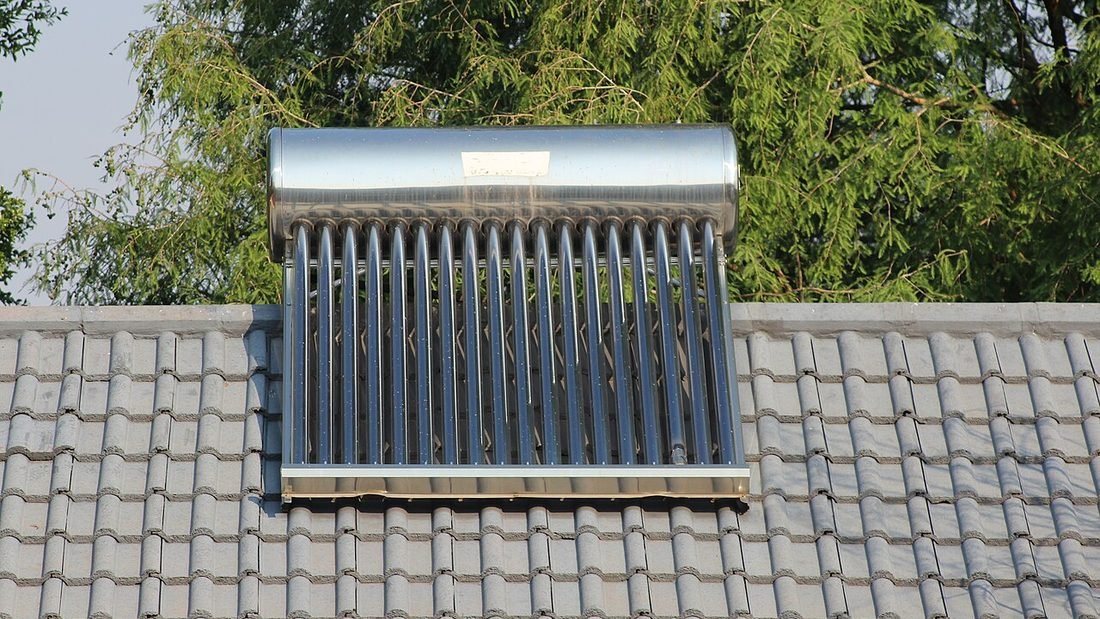
Image: DomesticSolarHeater SouthAfrica by Martinvl, CC BY-SA 4.0, via Wikimedia Commons.
In many Raipur homes the electric geyser is the second biggest electricity user after air conditioning. Winter mornings in particular lift bills. A solar water heater replaces most of that load with sunlight. This guide compares solar water heater vs electric geyser in Raipur on purchase cost, running cost and payback, and explains sizing and care.
Quick answer: a solar water heater costs more to buy, costs almost nothing to run and commonly pays back in two to four years in households that use hot water daily.
Heating water takes about 1 kWh for every 20 to 25 litres raised by 35 degrees Celsius. A family heating 120 litres a day uses roughly 5 to 6 units a day, or 150 to 180 units a month, if the geyser did all the work. At a domestic tariff in the higher slabs, that is a large share of the bill.
| Factor | Electric geyser | Solar water heater |
|---|---|---|
| Purchase cost | Low | Higher |
| Running cost | High, every day | Very low |
| Typical life | 5 - 8 years | 10 - 15 years with care |
| Winter performance | Reliable | Good in Raipur's clear winters |
| Monsoon performance | Reliable | Reduced; electric backup used |
| Maintenance | Anode and element replacement | Cleaning, scale control, annual check |
| Household | Typical need | System size |
|---|---|---|
| Couple | 50 - 80 LPD | 100 LPD |
| Family of four | 100 - 150 LPD | 150 - 200 LPD |
| Family of six with guests | 200 - 250 LPD | 250 - 300 LPD |
| Hostel or small hotel | 500+ LPD | Commercial system sized by occupancy |
Scale builds up in tubes and tanks and reduces performance. Use water softening where needed, choose designs with accessible tubes and schedule yearly descaling. See our solar water heater guide for more.
A family replaces a geyser that consumed about 150 units a month at Rs 7 per unit, about Rs 1,050 a month or Rs 12,600 a year. A 150 LPD solar water heater that supplies most of that saves perhaps Rs 9,000 to 10,000 a year after backup use. If the system costs Rs 30,000 to 40,000, payback is about three to four years. Higher tariffs or usage shorten it.
A family of five uses about 150 litres of hot water a day. Their 25-litre geysers run twice daily, using roughly 160 units a month in winter and 90 in summer. Averaged across the year that is about 125 units, or about 1,500 units annually. At Rs 7 a unit the geyser cost is around Rs 10,500 a year. A 200 LPD solar water heater supplies most of that, with the electric element covering a few cloudy days. Net saving of around Rs 8,000 to 9,000 a year pays back a Rs 35,000 system in about four years, and it keeps going for a decade or more.
The two complement each other. A water heater removes a heavy morning and evening load, while photovoltaics handle the rest of the house. If your roof is limited, prioritise whichever has the faster payback for your usage, which is often the water heater for large families. Read solar in Raipur for the photovoltaic case.
Where hot water use is large, solar water heating has even faster paybacks than in homes. A hostel using 1,000 litres a day, for example, would use roughly 40 to 50 units of electricity daily if heated by electricity, or 1,200 to 1,500 units a month. Solar thermal can supply most of it. Commercial systems are sized by occupancy and peak demand, with insulated storage and backup. See solar for hotels and restaurants.
Hot water is the quickest solar payback in many homes. For the fundamentals of solar in Raipur, read our cost and savings guide, and use the solar Raipur locality guide for your neighbourhood. A local solar company in Raipur should survey your roof, our checklist for the best solar company in Raipur shows what to ask, and our solar installation in Raipur team handles the work. Browse all solar guides or read about PM Surya Ghar Yojana in Raipur.
Over a few years, usually yes. A geyser costs less to buy but uses a lot of electricity, while a solar heater has almost no running cost.
Plan about 25 to 30 litres per person per day for bathing; a family of four typically needs 100 to 150 LPD.
On heavily overcast days output falls, so most systems include an electric backup element for those days.
Hard water scales tubes and tanks. Use proper water treatment or a flat-plate or pressurised design suited to your water, and follow maintenance advice.
Commonly two to four years for homes using electric geysers regularly, depending on tariff and usage.
Visit C-29, Sector 3, Devendra Nagar, Raipur, Chhattisgarh 492001, call 083051 31420 or send your details online for a free survey and a written quotation. Our solar installation in Raipur team replies the same working day.
A good solar company in Raipur survey comes first. Read about solar in Raipur, compare firms with our best solar company in Raipur questions and see how solar installation in Raipur works in your solar Raipur neighbourhood. Browse every article on the solar blog, or see PM Surya Ghar Yojana in Raipur and our solar services.
Free survey, litres-per-day sizing and a written quotation.