
0%

Hospitality runs on cooling, hot water and refrigeration. Solar can carry a good part of all three.
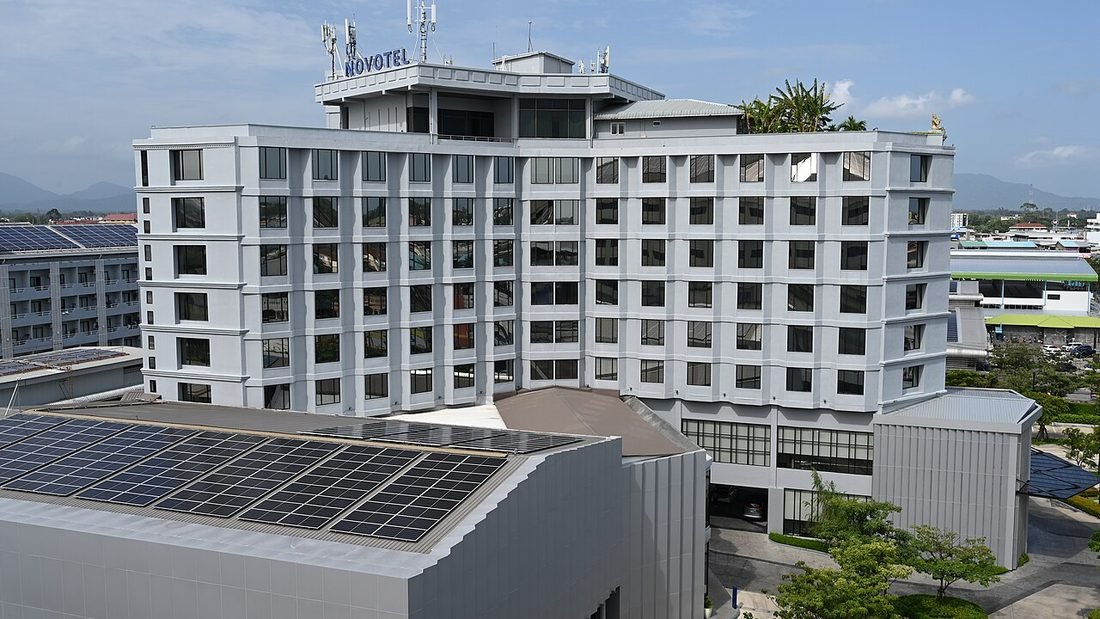
Image: DZ6 0459 Modern mid-rise hotel complex with a light-gray facade and... by PattayaPatrol, CC BY-SA 4.0, via Wikimedia Commons.
A hotel's electricity bill is dominated by three things: cooling, hot water and refrigeration. All three can be served efficiently by the sun. Solar for hotels and restaurants in Raipur works best when you treat electricity and hot water as two projects with one plan. This guide explains how to size each, where to place them and what to expect from payback.
Quick answer: a rooftop photovoltaic plant offsets daytime air-conditioning and kitchen load, a solar water heater cuts hot-water energy and together they commonly pay back in about four to five years.
| Load | Share of use (indicative) | Solar fit |
|---|---|---|
| Air conditioning | Largest share | Excellent by day; evening needs grid |
| Hot water (rooms, laundry, kitchen) | Large | Excellent with solar thermal |
| Refrigeration and cold rooms | Moderate, continuous | Good with net metering |
| Lighting and electronics | Moderate | Good by day |
| Pumps, lifts, laundry machines | Moderate | Good if daytime |
Shares vary widely by property. Use your own bills and sub-meter data where available.
A small hotel of 30 to 50 rooms might install 50 to 100 kW depending on roof area. At commercial tariffs, annual savings of Rs 9 to 15 lakh are plausible for a 75 to 100 kW plant, in line with the commercial ranges in our solar savings guide. Net metering exports surplus when occupancy is low and credits it when occupancy is high.
Solar thermal systems heat water directly and can supply a large share of daily demand. A property with laundry and guest rooms may need several thousand litres a day. A dedicated thermal plant sized by litres per day typically pays back faster than photovoltaics. Compare with an electric geyser in solar water heater vs electric geyser.
A standalone restaurant has refrigeration, kitchen exhaust, lighting and air conditioning, largely in daytime and evening. A 10 to 20 kW plant is common for a mid-size eatery with roof access. If you rent the premises, secure the owner's consent and a roof agreement. See solar for shops and MSMEs.
Guests notice outages. Hotels typically keep generators for backup and use solar to cut bills. A hybrid system with batteries can cover brief cuts silently. Decide the backup philosophy first, then size solar around it.
A hotel with 40 rooms, a restaurant, a laundry and a banquet hall pays about Rs 2.2 lakh a month. Air conditioning and hot water dominate. A 75 kW rooftop plant fits on the main block and generates about 9,000 units a month. At commercial tariffs, the annual saving is in the range of Rs 9 to 11 lakh. A separate solar water heating plant of about 3,000 litres a day cuts geyser and boiler consumption further. Together they commonly pay back in about four to five years, and both are visible to guests who value sustainability.
| Season | Occupancy and load | Solar note |
|---|---|---|
| Wedding and festival season | High occupancy, high cooling and laundry | Generation is strong in many of these months |
| Monsoon | Lower occupancy | Lower generation but also lower load |
| Summer | Strong cooling demand | Peak generation helps most |
Cooling and hot water are where hospitality meets the sun. The next step is a free survey. Speak to a solar company in Raipur that handles solar installation in Raipur from design to commissioning, and read the best solar company in Raipur checklist before you sign anything. For background, see solar in Raipur and the solar Raipur locality guide, explore the full solar blog, and check PM Surya Ghar Yojana in Raipur for subsidy slabs.
Yes. Daytime generation offsets daytime loads and net metering credits surplus against night consumption. A solar water heater also cuts hot-water load that peaks in the morning and evening.
It depends on size and tariff. Hotels with large air-conditioning and laundry loads often see paybacks around four to five years for rooftop plants.
Often yes. Hot water is one of the largest loads in a hotel, and solar thermal systems have fast paybacks.
A smaller plant still helps. Prioritise refrigeration and air-conditioning load and look at rooftop and parking-shed options.
Yes, many guests value it, but present it accurately and keep the main case as cost saving.
Visit C-29, Sector 3, Devendra Nagar, Raipur, Chhattisgarh 492001, call 083051 31420 or send your details online for a free survey and a written quotation. Our solar installation in Raipur team replies the same working day.
Next, talk to a solar company in Raipur about solar installation in Raipur. Our solar in Raipur guide explains costs, the solar Raipur guide covers your area and the best solar company in Raipur checklist helps you choose. Browse every article on the solar blog, or see PM Surya Ghar Yojana in Raipur and our solar services.
Bill review, roof survey and a combined electricity and hot-water proposal for your hotel or restaurant.