
0%

An inverter UPS gives backup but raises your bill. Solar cuts the bill but needs a battery to give backup. Here is how to choose.
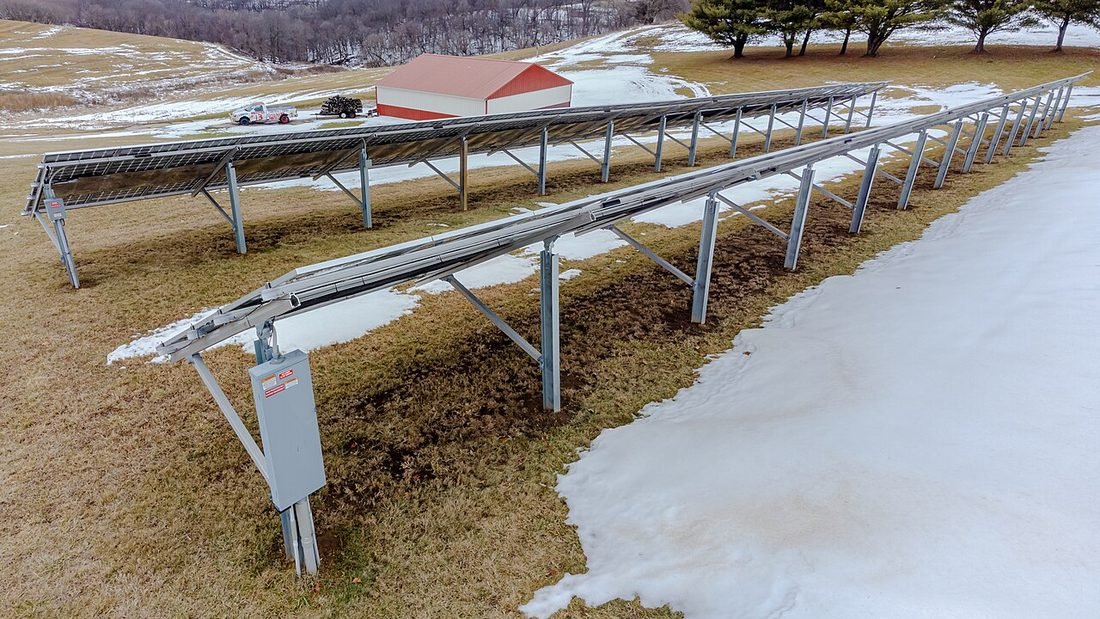
Image: Solar array-2 by Wikideas1, CC0, via Wikimedia Commons.
Most Raipur homes already have an inverter UPS in a corner: a box with a battery that keeps fans, lights and the router going during a cut. When families consider solar, the natural question is whether it replaces that box or sits beside it. This guide compares solar vs an inverter UPS for a home in Raipur on cost, backup and bill impact, and shows combinations that work.
Quick answer: a UPS costs you money every time it charges, solar earns money every sunny day. If your outages are short and rare, keep the UPS and add grid-tied solar. If outages are frequent, a hybrid solar system replaces the UPS and charges the battery from the sun.
The unit charges a battery from the grid when power is on and, when power fails, converts battery power to run selected loads. It does not generate energy; it stores grid energy for later. Losses in charging, storage and conversion mean you buy more energy than you finally use. A tubular lead-acid battery typically delivers about 70 to 80 per cent of the energy put into it.
A grid-tied solar system produces electricity during the day, uses it in the house and exports the surplus. It cuts your bill every sunny day but, for safety, switches off when the grid fails. A hybrid system adds a battery and a hybrid inverter so that the home can keep running in a cut, with the battery charged by solar first.
| Factor | Inverter UPS | Grid-tied solar | Hybrid solar |
|---|---|---|---|
| Backup in a cut | Yes, for the battery's duration | No | Yes, solar plus battery |
| Effect on bill | Slightly higher (battery charging, losses) | Large reduction | Large reduction |
| Upfront cost (typical home) | Rs 15,000 - 40,000 | Rs 1.65 - 1.90 lakh for 3 kW | Rs 2.8 - 3.6 lakh for 3 kW with 5 kWh lithium |
| Subsidy | None | PM Surya Ghar for eligible homes | Confirm how the portal treats the configuration |
| Maintenance | Battery water or replacement every 3 - 5 years (tubular) | Cleaning, annual check | Same, plus battery care |
| Noise | Quiet | Silent | Silent |
Suppose your backed-up load is about 600 W (lights, fans, router, television) and you run it from the battery for three hours a day on average. That is 1.8 units a day delivered. At 75 per cent round-trip efficiency, you draw about 2.4 units a day from the grid to charge the battery, or about 72 units a month. Multiply by your marginal tariff to find the monthly cost. In a household paying in the higher slabs, that can be a few hundred rupees a month, plus periodic battery replacement. Over a five-year battery life, the total can be a meaningful sum.
With a hybrid system, the same 1.8 units are supplied from the battery that solar charged during the day. The grid cost for that backup is close to zero. With grid-tied solar plus your existing UPS, the UPS still charges from the grid, but the solar output offsets your overall consumption, so the net bill falls substantially.
| Setup | Best for | Approx. extra cost beyond solar |
|---|---|---|
| Grid-tied solar plus existing UPS | Homes with short, rare outages and a working UPS | None |
| Grid-tied solar plus a small new UPS for the router and lights | Homes that want minimal backup cheaply | Rs 10,000 - 25,000 |
| Hybrid solar with lithium battery | Homes with frequent or long outages, work-from-home users | About Rs 1.0 - 1.7 lakh over a plain on-grid system |
Tubular lead-acid costs less upfront but gives about 50 per cent usable capacity and needs replacement every three to five years in Raipur heat. Lithium iron phosphate gives about 90 per cent usable capacity and lasts 10 to 15 years, at a higher initial price. For a hybrid system, lithium is usually the better lifetime choice. Our guide to solar battery storage for home in Raipur goes deeper.
A family in Telibandha has a 1.5 kVA inverter UPS with a tubular battery that is four years old and a bill of about Rs 3,200 a month. Outages are brief and infrequent. They choose a 3 kW grid-tied system and keep the UPS. The bill falls by about Rs 2,400 to 3,000 a month, the UPS keeps the essentials running during short cuts and, when the battery needs replacing, they will consider a small lithium unit. A neighbour in an outer colony with long evening cuts chooses a 3 kW hybrid with a 5 kWh lithium battery, and retires the UPS entirely. Both made reasonable choices for their own situations.
| Item (ten years, illustrative) | UPS only | Grid-tied solar plus existing UPS |
|---|---|---|
| Equipment purchase | UPS and batteries; likely two battery replacements | Solar system once; UPS batteries as before |
| Electricity bought for charging and losses | Continues every month | Same charging, but overall bill much lower |
| Bill reduction from generation | None | Large, every sunny day |
| Subsidy | None | Central subsidy, and state top-up if it applies |
| Net effect | Pure cost | Cost recovered in a few years, then savings |
The point of the comparison is not that a UPS is bad. It is that a UPS only protects you from outages, while solar also pays you back. Households that care about both should plan them together.
Avoid putting air conditioners and heavy pumps on a basic UPS; they empty the battery in under an hour and shorten its life.
The best moment is when the battery needs replacing anyway. Rather than buying another tubular bank, put that money towards a hybrid inverter and lithium battery paired with solar. You then retire the old inverter, cut the bill and gain backup in one purchase. If your UPS is young, keep it, add grid-tied solar and revisit the hybrid question when the battery wears out.
Backup and bill reduction are separate goals; decide which one you need first. If you are comparing providers, start with our guide to the best solar company in Raipur, then ask a solar company in Raipur for a written quote. Our solar installation in Raipur crews work across the city, the solar Raipur area guide explains local roof and shade patterns, and the main solar in Raipur guide covers costs. The full blog has more, and PM Surya Ghar Yojana in Raipur explains the subsidy.
They solve different problems. A UPS gives backup during a cut and costs you grid electricity to charge. Grid-tied solar cuts your bill but switches off in a cut. A hybrid system does both, at a higher price.
Yes. Many homes keep the existing inverter for backup and add a grid-tied solar system to cut the bill. This is often the cheapest way to get both benefits.
Yes, slightly. Charging the battery uses grid power, and conversion losses mean you draw more than you deliver. The extra cost depends on how often you run the backup.
Tubular lead-acid batteries commonly last three to five years in Raipur heat, with replacement cost each time. Lithium batteries last far longer but cost more upfront.
When outages are frequent or long and you also want to cut the bill. A hybrid charges its battery from solar, so backup energy is nearly free.
Visit C-29, Sector 3, Devendra Nagar, Raipur, Chhattisgarh 492001, call 083051 31420 or send your details online for a free survey and a written quotation. Our solar installation in Raipur team replies the same working day.
Looking for the best solar company in Raipur? See how solar in Raipur works, check the solar Raipur locality guide and book solar installation in Raipur with a trusted solar company in Raipur. Our checklist for the best solar company in Raipur shows what to ask. Browse every article on the solar blog, or see PM Surya Ghar Yojana in Raipur and our solar services.
A written comparison for your home showing UPS, on-grid and hybrid options with cost and payback.