
0%
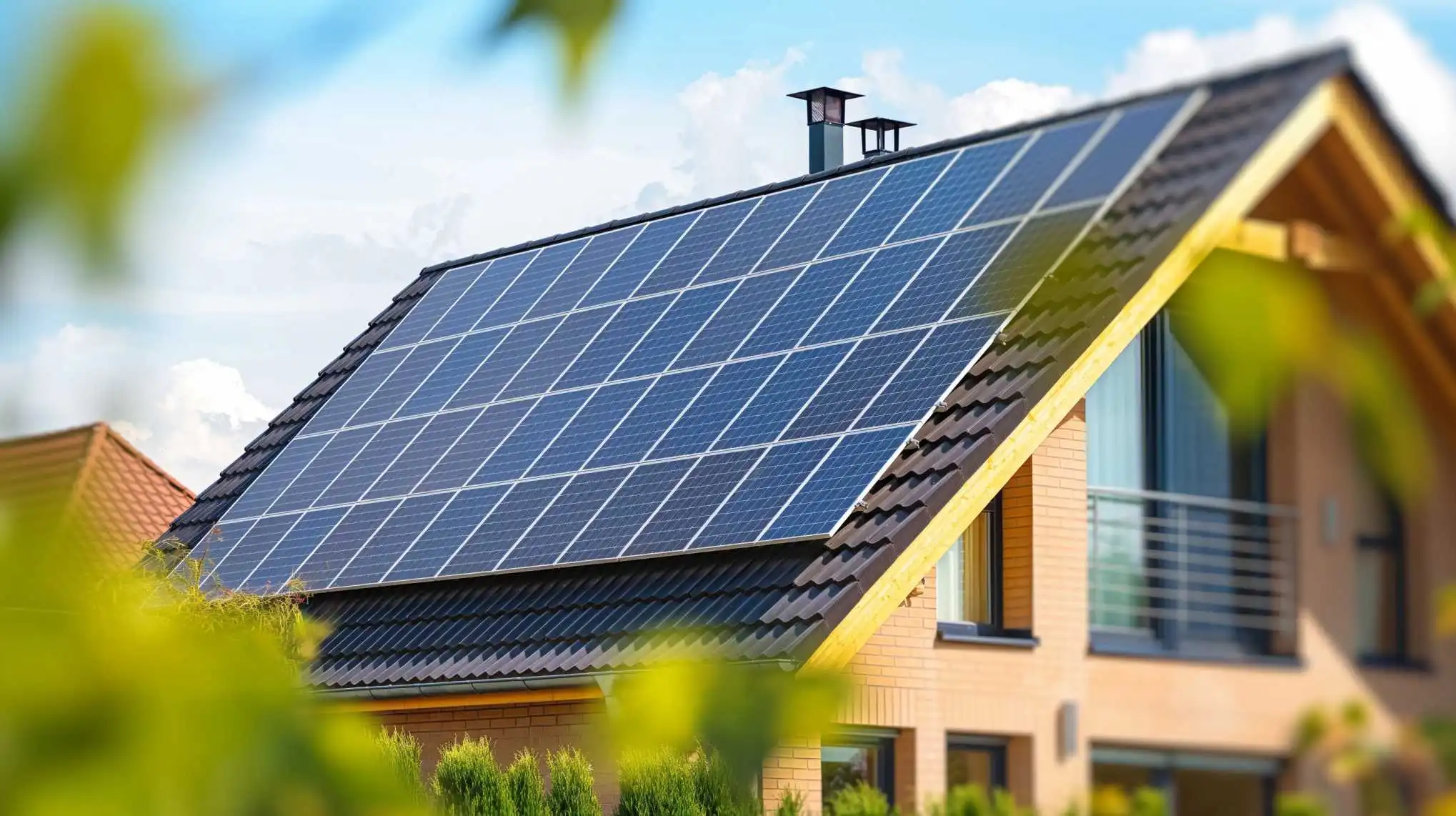
Up to Rs 78,000 from PM Surya Ghar, plus EMI plans that let you pay the balance from the money the system saves you.
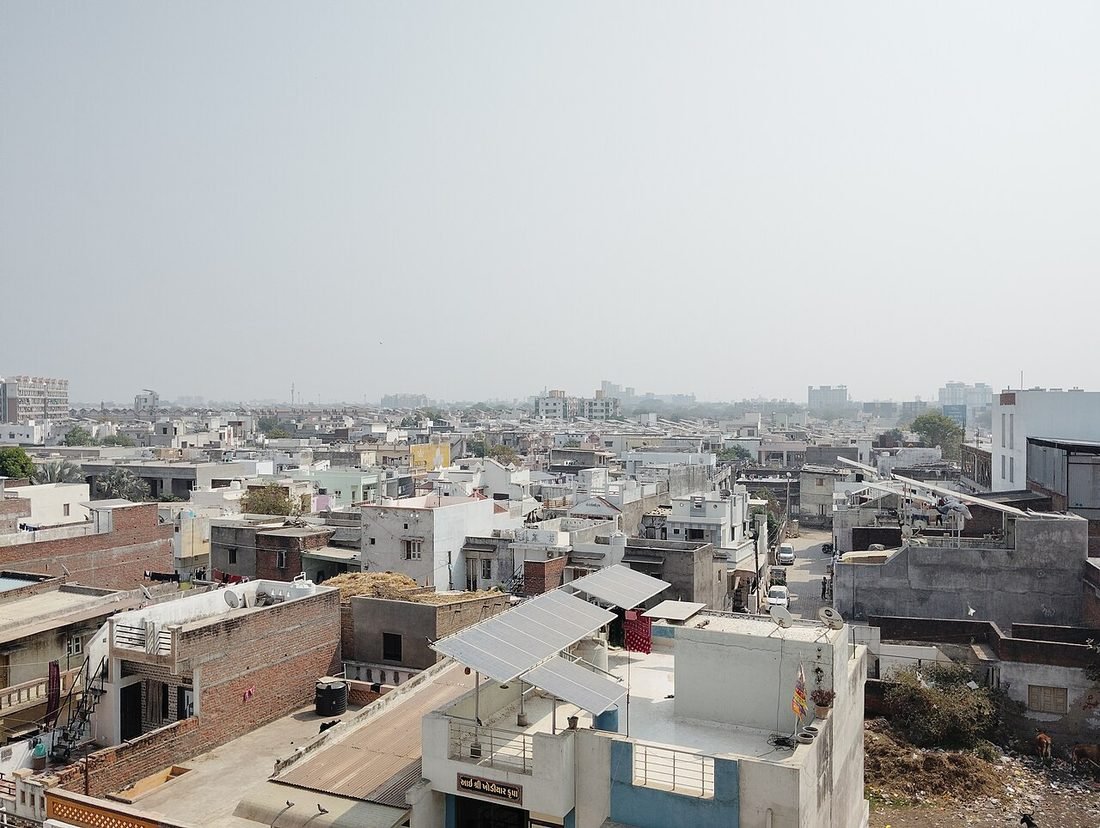
Image: Rooftop Solar panels on homes in Mehsana, Gujarat, India (69514) by Nizil Shah, CC BY-SA 4.0, via Wikimedia Commons.
Two things stop people in Raipur from going solar: the paperwork and the upfront cost. Both are solvable, and this guide deals with each in turn.
The solar subsidy in Chhattisgarh is worth up to Rs 78,000 on a residential rooftop system. Add a sensible EMI on the balance and most households find their monthly instalment is close to - sometimes below - the electricity bill they were already paying.
PM Surya Ghar Muft Bijli Yojna is a central government scheme administered through your discom, which in Chhattisgarh means CSPDCL. The subsidy is structured in slabs rather than as a flat percentage:
| System Size | Central Subsidy | Typical Cost | Net Cost to You |
|---|---|---|---|
| 1 kW | Rs 30,000 | Rs 65,000 - 75,000 | Rs 35,000 - 45,000 |
| 2 kW | Rs 60,000 | Rs 1.20 - 1.40 lakh | Rs 60,000 - 80,000 |
| 3 kW | Rs 78,000 | Rs 1.65 - 1.90 lakh | Rs 87,000 - 1.12 lakh |
| 5 kW | Rs 78,000 (capped) | Rs 2.60 - 3.00 lakh | Rs 1.82 - 2.22 lakh |
| 10 kW | Rs 78,000 (capped) | Rs 5.00 - 5.80 lakh | Rs 4.22 - 5.02 lakh |
The cap at 3 kW is why 3 kW is by far the most popular residential size in Raipur - it extracts the maximum subsidy per rupee spent. Larger systems still make sense where consumption justifies them, but the marginal capacity is unsubsidised.
Housing societies and resident welfare associations are treated separately and receive Rs 18,000 per kW for common-area load such as lifts, pumps and corridor lighting, up to 500 kW. Full scheme detail sits on our PM Surya Ghar Muft Bijli Yojna page.
Eligibility is simpler than most people expect:
If you have been searching how to apply for rooftop solar subsidy in Raipur, this is the actual sequence, in order. Skipping or reordering these steps is what causes most rejected claims.
Register on the national PM Surya Ghar portal using your CSPDCL consumer number, mobile number and email. Your consumer number appears on every CSPDCL bill. We do this for customers on the day they confirm their order.
CSPDCL verifies that your local distribution transformer can absorb the proposed capacity and approves the application. This generally takes 7 to 15 days in Raipur.
Only after feasibility approval should installation begin. The on-site work takes three to five days for a typical home - our installation timeline guide breaks that down day by day.
A CSPDCL engineer inspects the installation, checks earthing and anti-islanding protection, then the bidirectional net meter is fitted and sealed. Typically 2 to 4 weeks.
The commissioning certificate is uploaded to the portal along with your bank account details and a cancelled cheque. The subsidy is then credited directly to your account by DBT, normally within 30 to 45 days.
Keep the name spelling identical across the bill, Aadhaar and bank account. Mismatches are the commonest cause of rejected claims in Chhattisgarh.
Even after subsidy, a 3 kW system leaves roughly Rs 90,000 to Rs 1.1 lakh to fund. Very few families want to pay that as a lump sum, and they do not have to.
Residential rooftop solar up to 10 kW is classified under priority-sector lending by the Reserve Bank of India. That means banks are obliged to lend against it at concessional rates, without the system being treated as a discretionary consumer purchase.
| Finance Route | Typical Rate | Tenure | Best For |
|---|---|---|---|
| Bank solar rooftop loan | 7.0 - 10.5% | 3 - 10 years | Lowest cost, salaried applicants |
| Home loan top-up | 8.5 - 10% | Up to remaining tenure | Existing home-loan borrowers |
| NBFC solar finance | 11 - 15% | 2 - 5 years | Faster approval, lighter documentation |
| Business term loan | 9 - 13% | 3 - 7 years | Commercial installations |
Take the standard Raipur case - a 3 kW system, Rs 1.75 lakh cost, Rs 78,000 subsidy, so Rs 97,000 financed over five years at around 9 per cent.
| Item | Monthly Amount |
|---|---|
| EMI on Rs 97,000 over 5 years | About Rs 2,015 |
| Electricity saving from the system | About Rs 2,400 - 3,000 |
| Net monthly position | Positive from month one |
| After the loan closes (year 6 onward) | Full saving retained |
In other words, the system usually pays its own instalment. After five years the EMI stops and the generation continues for another two decades. The underlying savings maths is set out in our solar savings guide.
Commercial solar installation in Raipur does not attract PM Surya Ghar subsidy, but the tax treatment is generous:
Together these often bring the effective payback for a factory or showroom to four to five years - see our factory solar power plant guide.
Most people searching for the solar subsidy in Chhattisgarh want one number first. Under the central PM Surya Ghar scheme, an eligible household gets up to Rs 30,000 per kW for the first 2 kW and Rs 18,000 for the third kW, a maximum of Rs 78,000 for a system of 3 kW or more. The Chhattisgarh solar subsidy is credited to your bank account after your system is commissioned and inspected, so you pay the full price first and receive the subsidy afterwards.
| System size | Central subsidy | Indicative price before subsidy | Approx. net cost after subsidy |
|---|---|---|---|
| 1 kW | Rs 30,000 | Rs 50,000 - 80,000 | Rs 20,000 - 50,000 |
| 2 kW | Rs 60,000 | Rs 1.0 - 1.4 lakh | Rs 40,000 - 80,000 |
| 3 kW | Rs 78,000 (maximum) | Rs 1.4 - 1.9 lakh | Rs 62,000 - 1.12 lakh |
| 4 kW | Rs 78,000 (capped) | Rs 1.9 - 2.5 lakh | Rs 1.1 - 1.7 lakh |
| 5 kW | Rs 78,000 (capped) | Rs 2.2 - 3.0 lakh | Rs 1.4 - 2.2 lakh |
Prices are indicative ranges for 2026 and not a quotation; your roof, equipment and scope decide the real figure. The subsidy does not rise beyond 3 kW, so a larger system earns the same Rs 78,000, with the extra capacity unsubsidised but still saving on bills.
The phrase solar panel subsidy in Chhattisgarh covers several different schemes, and the right one depends on who you are. This table keeps them straight.
| You are a... | Scheme to look at | What it offers | Who to ask |
|---|---|---|---|
| Household with a rooftop | PM Surya Ghar (central) | Up to Rs 78,000 for 3 kW and above | National portal and a registered vendor |
| Housing society or RWA | PM Surya Ghar provisions for group housing | Support for common facilities such as lifts and lighting, with limits and conditions | National portal; confirm limits before you plan |
| Farmer with an irrigation pump | PM Kusum and state agency programmes | Support for solar pumps; terms vary and change | CREDA and an empanelled vendor |
| Shop, office, factory | No household subsidy; tax benefits instead | Accelerated depreciation and GST input credit may apply; ask your accountant | Your chartered accountant and EPC partner |
| Government or institution | Departmental and state schemes | Procurement through tenders or RESCO models | The relevant department |
The central subsidy of up to Rs 78,000 is the same for eligible households across India. A Chhattisgarh state top-up for domestic consumers has been reported, but state amounts, conditions and application routes can change, so treat any state support as an extra benefit until you have it confirmed in writing by CREDA, CSPDCL or your registered vendor. When you compare quotations, ask each company to show the central subsidy and any state support as separate lines with their conditions, so you can see exactly what is certain and what is not.
A common search is the last date for the solar subsidy in Chhattisgarh. Here is what can be said honestly. The central PM Surya Ghar scheme has been announced as running to the end of financial year 2026-27, which is March 2027. We are not aware of a separate published deadline for individual applications, and the scheme's terms, procedures and funding can be revised or extended, so confirm the current position on the official national portal rather than trusting a forwarded message or an advertisement that quotes a "last date".
| Planning point | What it means for you |
|---|---|
| The scheme period is limited | Do not leave your application to the last month; start early |
| Approvals and installation take time | Allow one to three months from registration to commissioning, longer in busy seasons |
| The subsidy is paid after commissioning | Your system must be installed, inspected and registered before the claim can be processed |
| Rules can change | Keep dated copies of the rules you relied on and your application number |
| Rumours about 'last dates' spread fast | Check the official portal, not social media |
A sensible rule is to register and choose your vendor several months before any end date you are worried about, rather than counting days.
| Stage | Typical time | Money movement |
|---|---|---|
| Portal registration and application | Same day | None |
| Vendor selection and quotation | 2 - 5 days | Modest advance as agreed in writing |
| Feasibility approval | Days to a few weeks | None |
| Installation | 1 - 3 days on site | Milestone payment |
| Net meter and inspection | 1 - 4 weeks | Final instalment after meter and documents |
| Subsidy credit | About a month after commissioning | Subsidy credited to your account |
Plan to fund the full price first. Options include savings, a bank loan for rooftop solar (confirm current rates and fees) or a mix; ask whether the loan allows prepayment when the subsidy arrives.
For more, see solar subsidy in Raipur, best solar subsidy deals in Raipur, the documents checklist and subsidy help.
Yes. We believe everyone should have access to clean energy, so we offer flexible financing and EMI options that make the switch to solar simple and stress-free. Rooftop solar is classified under priority-sector lending, so banks offer it at concessional rates - typically 7 to 10.5 per cent for residential systems.
Yes - we handle government subsidies and paperwork end to end. We register your application on the national portal, file the CSPDCL net-metering request, coordinate the inspection and upload the commissioning report so your subsidy is credited without you chasing anyone.
Under PM Surya Ghar Muft Bijli Yojna the central subsidy is Rs 30,000 per kW for the first 2 kW and Rs 18,000 for the third kW, capped at Rs 78,000 for a 3 kW or larger residential system. Group housing societies receive Rs 18,000 per kW for common facilities up to 500 kW.
Register on the national PM Surya Ghar portal with your CSPDCL consumer number, await feasibility approval, install through an MNRE-empanelled vendor, then submit the commissioning report and bank details. We complete every one of these steps for our customers at no extra charge.
Normally within 30 to 45 days of the net meter being commissioned and the commissioning report uploaded. It is paid directly into the bank account linked to your application by DBT - it never passes through the installer.
No. PM Surya Ghar is a residential scheme. Businesses instead claim 40 per cent accelerated depreciation in year one under the Income Tax Act, plus input GST credit, which often delivers a comparable financial benefit.
The central PM Surya Ghar scheme has been announced to run to March 2027, and we are not aware of a separate published deadline for individual applications. Rules can be extended or revised, so check the official national portal and apply early.
Eligible households can get up to Rs 30,000 per kW for the first 2 kW and Rs 18,000 for the third kW under PM Surya Ghar, a maximum of Rs 78,000 for 3 kW and above.
A state top-up for domestic consumers has been reported, but amount and conditions can change; confirm with CREDA or your vendor in writing before relying on it.
Households with a residential connection, a usable roof, no dues and a vendor registered for their district using compliant modules; farmers and businesses are covered by different schemes or benefits.
Agriculture schemes such as PM Kusum through state agencies have supported solar pumps; the household rooftop subsidy does not cover irrigation pumps. Confirm current terms with CREDA.
The household subsidy generally does not apply to commercial connections; businesses may claim depreciation and other benefits, so ask your accountant.
Typically around a month after commissioning and inspection, with one to three months overall from registration to commissioning.
Registration on the portal is free; never pay for a guaranteed subsidy, never share OTPs or bank details with callers and verify your vendor on the portal yourself.
Nobody should lose a Rs 78,000 subsidy to a form filled in wrongly, and nobody should postpone solar because the full amount is not sitting in the bank today. Between the central subsidy and a sensible EMI, most Raipur households can start generating their own power this month rather than next year.
Visit us at C-29, Sector 3, Devendra Nagar, Raipur, Chhattisgarh 492001, call 083051 31420, or send us your details online. Our team answers every enquiry from Raipur and across Chhattisgarh, usually on the same working day.
We file your PM Surya Ghar application, CSPDCL net-metering request and subsidy claim end to end. You sign, we chase.