
0%
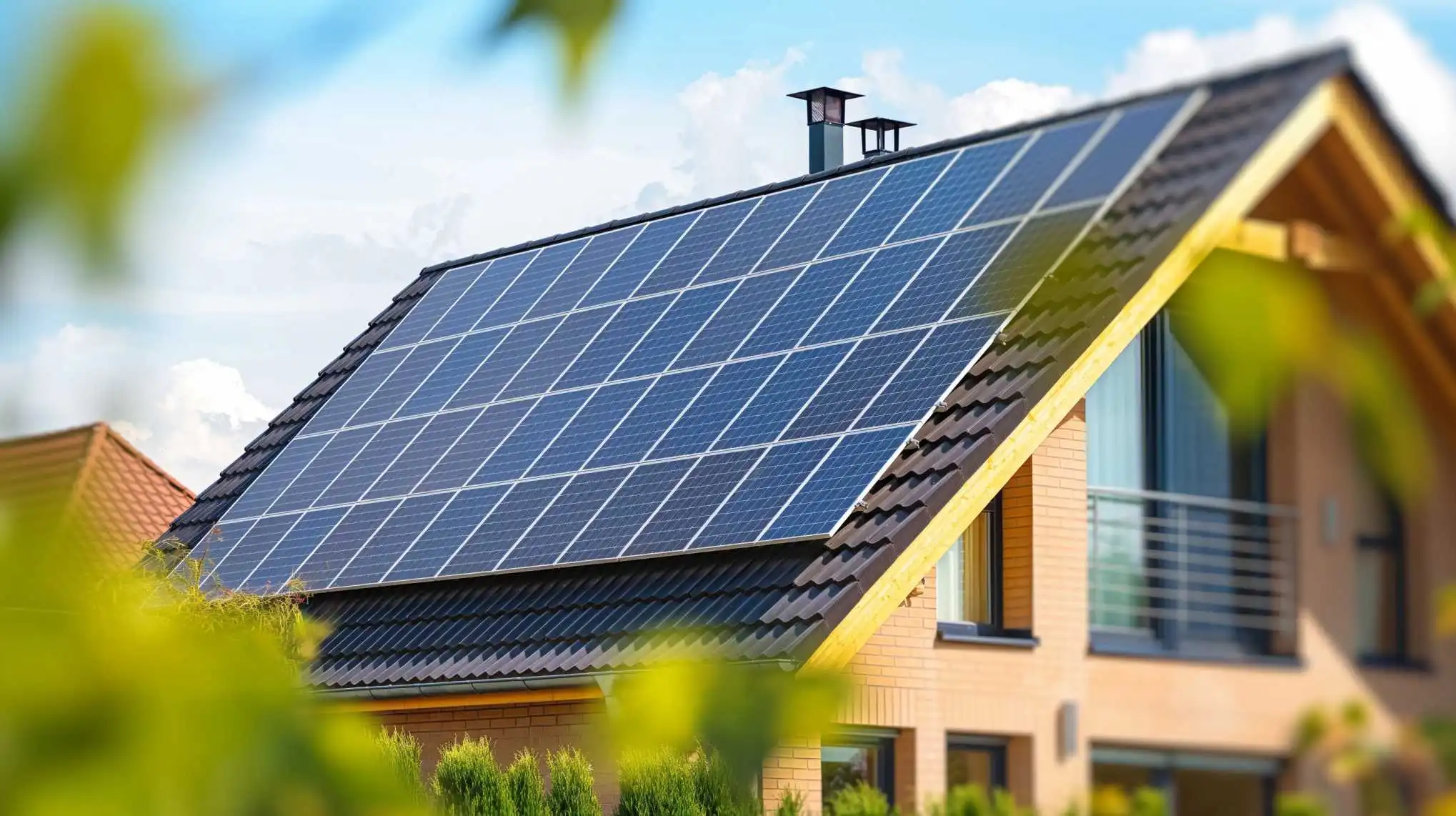
How much you can claim, how to apply, what to confirm for Odisha and the mistakes that cost families their subsidy.

Image: Gupta Agro Solar (illustration).
The subsidy decides how affordable rooftop solar really is, so anyone searching for solar subsidy in Odisha needs clear answers: how much is available, who is eligible, what the steps are, which documents are needed, how long it takes and which mistakes cost families their subsidy. This guide explains the central PM Surya Ghar subsidy as it applies to households in Odisha, shows how to avoid delays, covers farm and business options and is honest about the parts that differ by state and must be confirmed from official sources, including any additional Odisha support and the distribution company's procedures.
Quick answer: eligible households can receive up to Rs 30,000 per kW for the first 2 kW and Rs 18,000 for the third kW under the central PM Surya Ghar scheme, a maximum of Rs 78,000 for systems of 3 kW and above. You register on the national portal with your state, distribution company and consumer number, choose a vendor registered for your district, install modules that meet the domestic content rule, get the net meter and inspection and the subsidy is credited to your bank account after commissioning. Any Odisha-specific top-up, net-metering rules and timelines should be confirmed in writing before you rely on them.
| System size | Central subsidy (eligible homes) | Indicative price before subsidy | Approx. net cost |
|---|---|---|---|
| 1 kW | Rs 30,000 | Rs 50,000 - 80,000 | Rs 20,000 - 50,000 |
| 2 kW | Rs 60,000 | Rs 1.0 - 1.4 lakh | Rs 40,000 - 80,000 |
| 3 kW | Rs 78,000 (maximum) | Rs 1.4 - 1.9 lakh | Rs 62,000 - 1.12 lakh |
| 4 kW | Rs 78,000 (capped) | Rs 1.9 - 2.5 lakh | Rs 1.1 - 1.7 lakh |
| 5 kW | Rs 78,000 (capped) | Rs 2.2 - 3.0 lakh | Rs 1.4 - 2.2 lakh |
The subsidy does not increase beyond 3 kW, so larger systems earn the same amount; the extra capacity is unsubsidised but still saves on bills. Prices are indicative ranges, not quotations. The subsidy is paid after commissioning, so you finance the full price first.
| Condition | What it usually means | Check |
|---|---|---|
| Residential electricity connection | A household connection in the applicant's name | Bill shows a domestic category |
| Roof you can use | You own the roof or hold written consent from the owner or society | Ownership proof or NOC |
| No unpaid dues | The connection is in good standing | Pay arrears before applying |
| Registered vendor and compliant modules | The installer is registered for your district; modules meet the domestic content rule | Verify on the portal; ask for the DCR certificate |
| Matching documents | Names on bill, Aadhaar and bank account agree | Correct mismatches first |
| Registration before installation | You apply on the portal and follow the steps in order | Do not install first |
Eligibility rules can be revised, so confirm them on the official portal before you apply and keep dated copies of what you relied on.
| Step | What you do | Who acts | Typical time |
|---|---|---|---|
| 1 | Register on the national portal with your state, distribution company and consumer number | You | Same day |
| 2 | Log in and apply for rooftop solar; note the application number | You or vendor | Same day |
| 3 | Choose a vendor registered for your district; compare itemised quotes | You | 2 - 5 days |
| 4 | Feasibility approval from the distribution company | Distribution company | Days to a few weeks |
| 5 | Installation with compliant modules and proper protection | Vendor | 1 - 3 days for a home |
| 6 | Net meter fitting and inspection | Distribution company | 1 - 4 weeks, varies |
| 7 | Submit commissioning details and bank information | You and vendor | A few days |
| 8 | Subsidy credited to your bank account | Government | Roughly a month after commissioning |
These are typical ranges, not promises; each division, month and workload differs. Keep every acknowledgement and application number in one folder.
| Document | Tip to avoid delay |
|---|---|
| Latest electricity bill | Consumer number visible; no dues; domestic category |
| Aadhaar of the applicant | Name spelled exactly as on the bill |
| Bank account details or cancelled cheque | Account in the applicant's own name |
| Mobile number and email | Active, for OTPs and updates |
| Ownership proof or consent | Matches the connection holder; society NOC for apartments |
| Roof photographs | Clear, dated, shadow-free area marked |
| Quotation and layout | Equipment named; capacity matches the application |
For the full list and common traps, read the subsidy documents checklist; the document logic is the same across states.
The central subsidy is the same for eligible households across India, but state-level elements vary. Odisha has its own electricity regulator, its own distribution companies and its own renewable energy agency, and rules on net metering, capacity limits, settlement of exported units and any state top-up are set at that level and can change. Before you rely on any of them, ask the distribution company for your area and your installer to confirm in writing:
Treat any reported state support as upside until you hold it in writing.
The household rooftop subsidy does not cover irrigation pumps. Agriculture schemes such as PM Kusum, delivered through state agencies, have supported solar pumps in many states; terms change, so check current programmes with the state renewable energy agency and an empanelled vendor. A farm house with a residential connection can use the household scheme for its roof.
The central household subsidy is generally not available for commercial connections. Businesses usually rely on bill savings and tax treatment such as depreciation; ask your accountant. See solar for industries and farms in Odisha.
The scheme describes provisions for resident welfare associations and group housing societies for common facilities such as lifts and lighting, with capacity limits and conditions. Confirm them on the portal and pass a society resolution before you plan.
Because the subsidy is credited after commissioning, you normally pay the full price first. Options include paying from savings, a bank loan designed for rooftop solar (confirm current terms, collateral rules and fees with your bank) or a mix. Choose an EMI you can pay comfortably even in low-saving months such as the monsoon, and ask whether the loan allows prepayment when the subsidy arrives. A simple example: a 3 kW system priced at Rs 1.7 lakh with a Rs 78,000 subsidy has a net cost near Rs 92,000 once the credit arrives. See solar loan and EMI vs monthly savings for the method.
Gupta Agro Solar is based in Raipur, Chhattisgarh. We are expanding our guidance for Odisha, and for projects in Odisha we discuss survey logistics, feasibility and service arrangements with you openly before any commitment. We know the subsidy file well from our work in Chhattisgarh: we check documents before you pay, explain the order of steps, insist on compliant modules and show the subsidy as a separate line in the quotation. For Odisha, we will tell you plainly what we can handle, what the distribution company and your vendor must confirm and what remains uncertain. See solar in Odisha, solar company in Odisha and our home-state guide best solar subsidy help.
Continue with Solar in Odisha, Solar Company in Odisha, Solar Subsidy in Odisha, Rooftop Solar in Bhubaneswar, Cuttack and Rourkela, Solar for Industries and Farms in Odisha and Top 10 Solar Companies in Odisha. Our home state guides are also useful for comparison: solar company in Chhattisgarh, best solar company in Chhattisgarh and top 10 solar companies in Chhattisgarh. You can also browse the solar blog, our solar services, the Gupta Agro Solar home page or contact us.
Eligible households can receive up to Rs 30,000 per kW for the first 2 kW and Rs 18,000 for the third kW under PM Surya Ghar, a maximum of Rs 78,000 for 3 kW and above; confirm any additional Odisha support with official sources.
Register on the national portal with your state, distribution company and consumer number, apply for rooftop solar, choose a registered vendor, complete installation, net meter and inspection, then submit bank details for the credit.
Additional state support may exist or change; confirm the current amount, conditions and application route with the distribution company or state agency in writing before relying on it.
After commissioning and inspection, typically around a month later into your bank account.
No; installing first can put the subsidy at risk, so register and follow the portal order before work begins.
Households with a residential connection, a usable roof, no dues and a vendor registered for their district using compliant modules.
Yes; subsidised systems should be installed by a vendor registered for your district on the national portal.
Domestic content requirement: modules made with domestic cells are expected for subsidised systems, so ask for the certificate for the exact model.
Agriculture schemes such as PM Kusum through state agencies have supported solar pumps; confirm current terms with the state renewable energy agency.
The household subsidy generally does not apply to commercial connections; ask your accountant about depreciation and other benefits.
Latest bill, Aadhaar, bank details, mobile and email, ownership proof or consent and roof photographs, with matching names.
Registration on the portal is free; never pay for a guaranteed subsidy, never share OTPs or bank details with callers and verify the vendor yourself on the portal.
Gupta Agro Solar is based at C-29, Sector 3, Devendra Nagar, Raipur, Chhattisgarh 492001. Call 083051 31420 or send your details online to discuss a survey, feasibility and a written quotation, including for Odisha projects.
Document check and honest guidance.