
0%
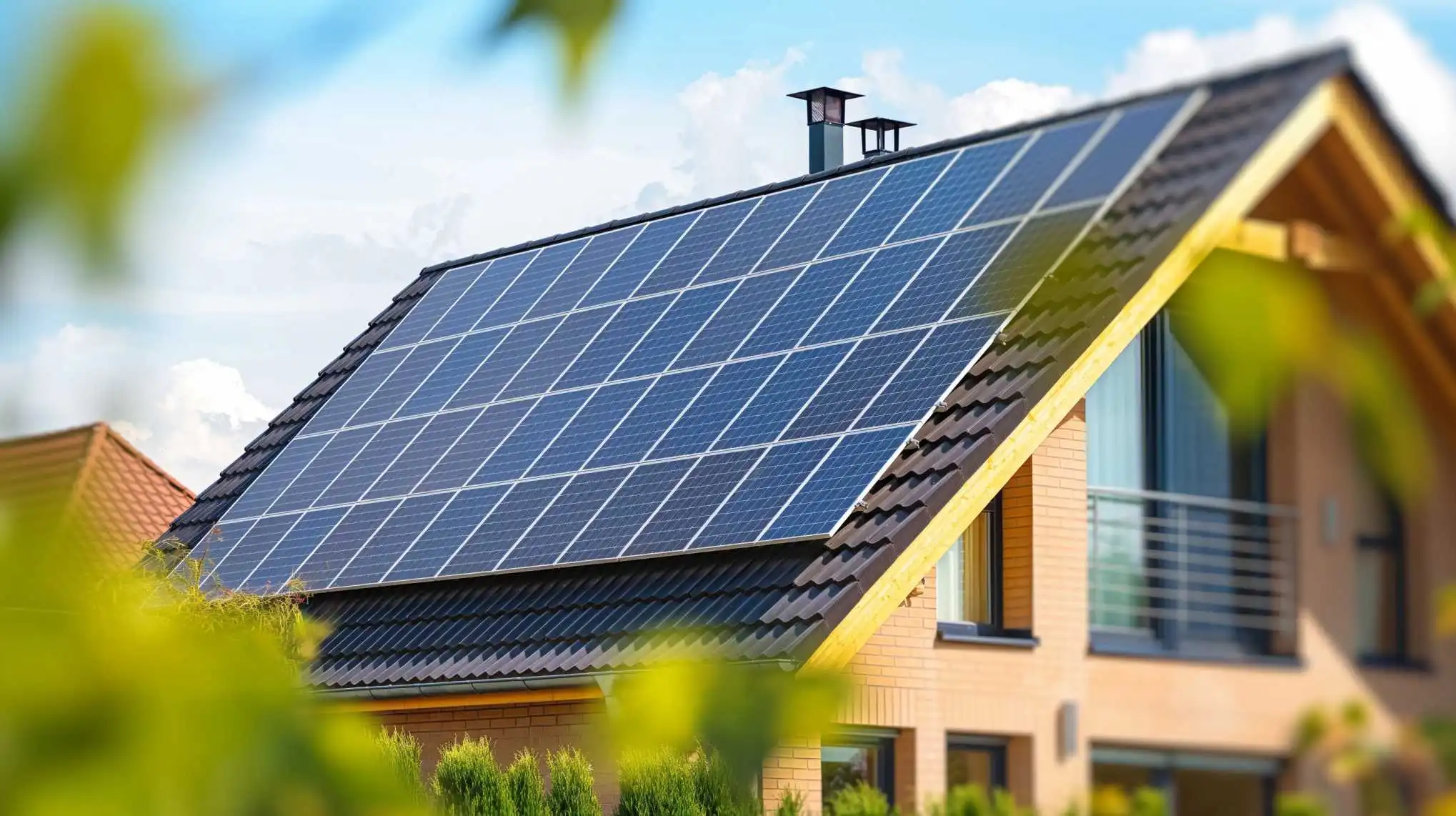
Factory rooftops, mills, cold storage and solar pumps, with the structure, approval and contract questions that matter.

Image: Gupta Agro Solar (illustration).
Odisha's economy runs on heavy industry, mining, ports, rice milling, cold storage and, above all, agriculture. All of them use large amounts of daytime electricity or diesel, which is exactly the profile solar suits best. This page explains solar for industries and farms in Odisha: how factories, mills, warehouses and mining-linked units can use rooftop and ground-mounted plants, how farmers can replace diesel with solar pumps, what to check on structures in cyclone and coastal conditions, how projects are approved, how to compare capex, loan and power purchase models and what to put in the contract.
Quick answer: an industrial solar plant in Odisha needs a load study, a signed structural assessment of the roof or land, protection and power-quality design, distribution company approvals, trained crews and a written operation and maintenance contract. Typical payback for well-matched daytime loads is often about three to five years, depending on tariff, utilisation and cost. A farm solar pump should be sized from your water need and total head, paired with a storage tank, protected against theft and rodents and checked against agriculture schemes through state agencies.
| Industry or site | Typical load pattern | Solar approach | Key checks |
|---|---|---|---|
| Steel and metal units | Heavy, steady, often around the clock | Rooftop on sheds; ground plants on spare land; offsets daytime share | Power quality, roof strength, dust, night load stays on grid |
| Aluminium and heavy process industry | Very large continuous load | Captive or open-access options beyond rooftop; rooftop for auxiliary loads | Regulation, approvals, scale |
| Mining-linked services and workshops | Daytime workshops, offices, pumping | Rooftop and small ground plants | Dust, access, safety |
| Rice mills and agro-processing | Daytime motors, dryers, storage | Rooftop on mill and godown roofs | Motor starting currents, seasonal load |
| Cold storage and warehouses | Compressor load follows daytime heat | Rooftop plants; backup for critical loads | Structure, night load, door-opening patterns |
| Ports and logistics yards | Lighting, cranes, offices, reefer points | Rooftop, carports, solar lighting | Salt air, wind loads, corrosion |
| Hospitals, hotels and institutions | Air conditioning, hot water, lighting | Rooftop PV plus solar water heating | Backup design, roof access, safety |
| Plant | Annual generation (indicative) | Typical payback | Notes |
|---|---|---|---|
| 50 kW rooftop | About 68,000 units | About 3.5 - 4.5 years | Small unit or large warehouse |
| 150 kW rooftop | About 205,000 units | About 3.5 - 4.5 years | Mid-size factory roof |
| 500 kW rooftop or ground | About 680,000 units | Depends on land, approvals and tariff | Large plant; engineering critical |
These are illustrations using assumed tariffs and prices, not quotations. Your bills, roof and quotation decide the real numbers. Ask your accountant about depreciation, GST treatment and loan interest.
| Issue | What a good EPC does |
|---|---|
| Roof strength and age | A structural engineer assesses purlins, sheets and slabs and signs the assessment |
| Cyclone and wind uplift | Designs clamps, rails and anchoring for the local wind speed; states the basis in writing |
| Corrosion near the coast or in industrial air | Uses galvanised or coated steel and stainless fasteners; specifies coating thickness |
| Leaks | Uses clamps that avoid penetrations where possible; seals and warranties any holes |
| Fire safety | Provides DC isolation, clear access paths, certified components and insurer approval |
| Dust and soiling | Plans cleaning access, walkways and a regular schedule |
| Night loads | Keeps night loads on the grid or plans storage if justified |
| Stage | Typical duration |
|---|---|
| Load and roof or land study | 1 - 3 weeks |
| Design and proposal | 1 - 2 weeks |
| Approvals with the distribution company and others | 3 - 6 weeks |
| Procurement | 3 - 6 weeks |
| Installation | 2 - 6 weeks, by size |
| Commissioning and inspection | 1 - 3 weeks |
Rules on capacity limits, net metering, captive and open-access arrangements are set at state level and change; ask the distribution company and your EPC partner for current requirements in writing. See solar park and large projects and choosing an EPC company for the framework, remembering that Odisha's own rules apply.
| Model | Upfront cost | Ownership | Best for | Watch for |
|---|---|---|---|---|
| Capex | Full | You | Businesses with cash and a long horizon | You carry performance and maintenance responsibility |
| Loan | Low | You | Ownership without a large outlay | EMI vs savings; prepayment rules |
| PPA or RESCO | None | Developer | Businesses preferring no capital spend | Tariff escalation, term, buy-out, roof access |
See PPA explained; compare total cost over the term and have your accountant and lawyer read the contract.
For farmers, the biggest use of solar is irrigation. Paddy and vegetable cultivation need water at predictable times, and diesel pumps are costly and noisy while grid pumps depend on supply schedules. A solar pump uses panels to run the motor through a controller, working whenever the sun shines. Size it from your daily water need and total head, which is the vertical lift plus friction losses, and store water in a tank rather than buying batteries. Farm houses with a residential connection can also use rooftop solar under the household scheme.
| Pump (typical) | Suits | Panel capacity (approx.) |
|---|---|---|
| 1 - 2 HP | Small plots, shallow sources | 1.5 - 3 kW |
| 3 HP | Medium borewells and a few acres | 3 - 4 kW |
| 5 HP | Deeper borewells and larger plots | 5 - 6 kW |
These are typical pairings; your vendor should confirm them from the pump curve. For sizing steps see solar pump guide and solar pump vs electric vs diesel.
Agriculture schemes such as PM Kusum, delivered through state agencies, have supported solar pumps and small plants for farmers in many states, and Odisha has its own renewable energy agency and programmes. Terms, subsidy levels and empanelled vendors change, so ask the state agency and any vendor for current details in writing. For businesses, the household subsidy generally does not apply; returns come from bill savings and tax treatment. See PM Kusum vs PM Surya Ghar for how the two schemes differ.
Gupta Agro Solar is based in Raipur, Chhattisgarh. We are expanding our guidance for Odisha, and for projects in Odisha we discuss survey logistics, feasibility and service arrangements with you openly before any commitment. Industrial, commercial and farm solar are core parts of our work in Chhattisgarh, and we can help you frame the right questions, review proposals and discuss whether we can support a project in Odisha. See solar in Odisha, solar company in Odisha and our home-state pages industries and EPC projects and farmers and solar pumps.
Continue with Solar in Odisha, Solar Company in Odisha, Solar Subsidy in Odisha, Rooftop Solar in Bhubaneswar, Cuttack and Rourkela, Solar for Industries and Farms in Odisha and Top 10 Solar Companies in Odisha. Our home state guides are also useful for comparison: solar company in Chhattisgarh, best solar company in Chhattisgarh and top 10 solar companies in Chhattisgarh. You can also browse the solar blog, our solar services, the Gupta Agro Solar home page or contact us.
For well-matched daytime loads, often yes; typical payback is about three to five years depending on tariff, utilisation and cost, so get a load study and a written estimate.
Often 50 to 500 kW or more, limited by roof area, structure and daytime load.
A signed structural assessment, wind-load design for local conditions, corrosion-resistant materials and checks of purlins, sheets and waterproofing.
Often two to four months from study to commissioning, depending on size, approvals and procurement.
The central household subsidy generally does not apply to commercial connections; ask your accountant about depreciation and other benefits and confirm state incentives with official sources.
Capex usually has the lowest long-term cost; a loan spreads cost; a PPA avoids upfront spending but costs more per unit over the term.
Panels power a pump controller and motor directly, so water flows when the sun shines; storage tanks hold water for other times.
It depends on daily water need and total head; typical pumps are 1 to 5 HP with 1.5 to 6 kW of panels, confirmed from the pump curve.
Usually not; store water in a tank instead.
Agriculture schemes such as PM Kusum through state agencies have supported solar pumps; confirm current terms and empanelled vendors with the state renewable energy agency.
Use tamper-proof fasteners, fencing, locked controllers and recorded serial numbers, and consider insurance.
Gupta Agro Solar is based in Raipur, Chhattisgarh and does industrial and farm solar there; for Odisha we discuss feasibility, logistics and service arrangements openly before any commitment.
Gupta Agro Solar is based at C-29, Sector 3, Devendra Nagar, Raipur, Chhattisgarh 492001. Call 083051 31420 or send your details online to discuss a survey, feasibility and a written quotation, including for Odisha projects.
Load study, feasibility and a written proposal.