
0%
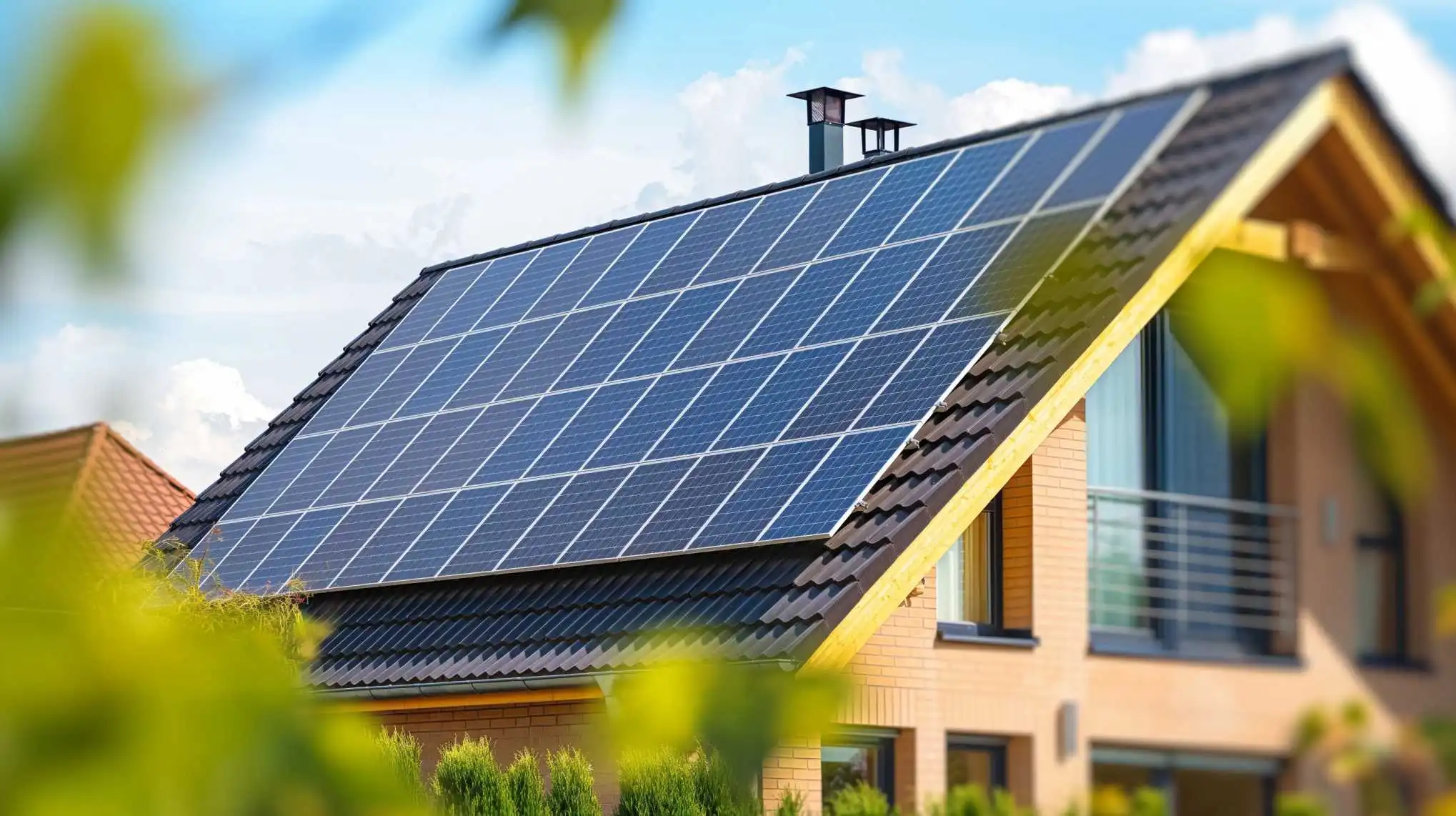
A city-by-city guide to roofs, shade, sizing and coastal design for rooftop solar across Odisha.
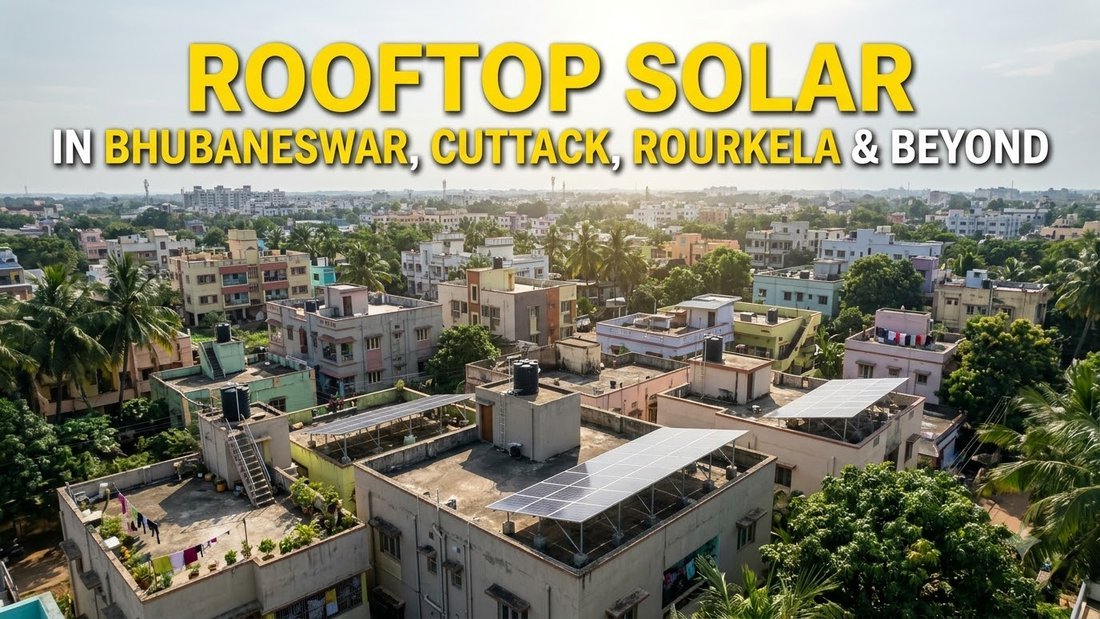
Image: Gupta Agro Solar (illustration).
Rooftop solar in Odisha's cities is mostly a story of concrete terraces, water tanks, staircase rooms, tight lanes and neighbouring buildings. Bhubaneswar has planned sectors and fast-growing apartment blocks, Cuttack has dense older neighbourhoods, Rourkela has township housing and industrial surroundings, Berhampur, Sambalpur, Puri and Balasore each have their own mix of roofs and loads. This guide to rooftop solar in Odisha, with a focus on Bhubaneswar, Cuttack and Rourkela, explains what to expect on each kind of roof, how to size a system, what to check for shade and structure, how apartments and independent houses differ and how coastal conditions change the design.
Quick answer: an independent house with a flat concrete roof is the easiest case for rooftop solar in Odisha: about 10 square metres of shadow-free roof per kW, a tilt of roughly 10 to 20 degrees, sealed foundations and a structure designed for local wind. Apartments need a society resolution and usually a common-area plant. Dense lanes need careful layout around tanks and neighbours, and coastal towns need corrosion-resistant steel and stainless fasteners. Always get an in-person survey, because shade and structure vary house by house.
| City or area | Typical buildings (general) | Solar angle | Watch for |
|---|---|---|---|
| Bhubaneswar | Planned sectors, independent houses, apartment blocks, offices, institutions | Homes and societies; commercial rooftops; new buildings can plan solar early | Society consent, tank and stair-room shade, wind exposure on upper floors |
| Cuttack | Dense older neighbourhoods, markets, mixed residential and commercial buildings | Compact layouts, shops and homes, light structures | Narrow lanes for delivery, shared roofs, old waterproofing, shade from neighbours |
| Rourkela | Township housing, steel-linked services, industrial surroundings | Homes, colonies, commercial and industrial rooftops | Roof rights in colonies, dust and industrial soiling, structural checks for sheds |
| Berhampur (Brahmapur) | Residential and commercial base on the coast | Homes, shops, institutions | Coastal corrosion, cyclone wind loads, humidity |
| Sambalpur and western Odisha | Residential, institutional, mining and industry nearby | Homes and commercial rooftops | Higher summer heat, dust, larger roofs on institutions |
| Puri, Balasore and the coast | Homes, hotels, institutions | Homes and hospitality rooftops | Salt air, cyclone design, hotels with hot-water loads |
These are general patterns, not claims about every neighbourhood; a survey shows your own roof.
As a planned city with wide sectors, many independent houses and a growing stock of apartment buildings and offices, Bhubaneswar suits rooftop solar well. Independent houses usually have flat concrete roofs with water tanks and staircase rooms; careful placement of panels away from these shadows is the main design task. Apartment blocks need a managing committee resolution, a roof survey and a plan for common-area loads such as lifts, pumps and corridor lighting. New buildings can reserve roof area, lay conduits and plan sanctioned load for solar at design stage. Upper floors and exposed roofs see stronger wind, so structure design matters. Offices, institutions and commercial buildings with daytime loads often see attractive payback because commercial tariffs are higher than domestic ones.
Cuttack's older neighbourhoods have dense construction, shared walls and narrow lanes. These conditions make careful surveys and light, well-anchored structures important. Shade from neighbouring buildings and tanks is common, delivery of materials may need hand carrying, and older roofs often need waterproofing repair before installation. Shops with houses above them may have separate meters for each part of the building, so confirm which connection feeds which load before sizing. Smaller systems of 1.5 to 3 kW are common for homes, with larger systems for commercial buildings that have usable roof area.
Rourkela combines township and colony housing with a large industrial environment. Colony roofs may need permission from the owning body, and industrial dust can settle on panels faster than in residential areas, so a regular cleaning plan matters. Commercial and industrial rooftops, including sheds with sheet roofing, need a structural assessment, clamps suited to the sheet profile and fire-safety planning. See solar for industries and farms in Odisha for the industrial details.
Berhampur, Sambalpur, Puri, Balasore, Jharsuguda, Angul, Talcher, Keonjhar and many smaller towns have homes and businesses that can benefit from rooftop solar. The principles are the same everywhere: size from bills, survey in person, design the structure for local wind and corrosion, use a registered vendor and plan for service. In small towns, the distance to a service engineer is often the deciding factor, so ask every company where its engineer is based and how fast they respond.
| Monthly bill (at about Rs 7 per unit) | Approx. units | Suggested system | Roof area needed | Central subsidy (eligible homes) |
|---|---|---|---|---|
| Rs 1,500 | About 215 | 2 kW | About 20 sq m | Rs 60,000 |
| Rs 2,500 | About 355 | 3 kW | 30 - 35 sq m | Rs 78,000 |
| Rs 3,500 | About 500 | 4 - 4.5 kW | 40 - 45 sq m | Rs 78,000 |
| Rs 5,000 | About 715 | 5 - 6 kW | 50 - 60 sq m | Rs 78,000 |
Divide your average monthly units by about 120 to estimate kW, then check roof space. Use how many panels a 3BHK needs and the savings calculator for the arithmetic; unit output is slightly lower in the monsoon and higher in spring.
| Roof type | Mounting approach | Care points |
|---|---|---|
| Flat reinforced concrete (most common) | Galvanised frames on sealed foundations at 10 - 20 degrees tilt | Waterproof first, keep drains clear, leave walkways for cleaning |
| Sheet or tin roof | Clamps matched to the sheet profile or fasteners with sealing washers | Check purlins and corrosion; design for uplift in strong wind |
| Clay tile roof | Roof hooks under tiles with proper flashing | Replace broken tiles, avoid foot traffic damage |
| Asbestos sheet roof | Avoid drilling; replace the roof first | Health rules apply; do not allow unsafe work |
| Terrace with parapet | Raised frames to clear parapet shadow | Check winter shade from the south parapet |
For flats, rooftop solar is usually a society decision. The managing committee collects twelve months of common-area bills, passes a resolution, surveys the roof, compares itemised quotations and appoints a registered vendor. The plant typically supplies lifts, pumps and lighting, and the saving reduces maintenance charges for every flat. Check subsidy provisions for housing societies on the portal before planning. See solar for apartment society for the process, which is the same in any state.
Gupta Agro Solar is based in Raipur, Chhattisgarh. We are expanding our guidance for Odisha, and for projects in Odisha we discuss survey logistics, feasibility and service arrangements with you openly before any commitment. We can help you size a system, understand the survey and quotation and compare offers from any company. For the full state guide, see solar in Odisha; to choose a company, see solar company in Odisha; and for our home-city roof guidance, see rooftop solar in Raipur and solar on a flat roof.
Continue with Solar in Odisha, Solar Company in Odisha, Solar Subsidy in Odisha, Rooftop Solar in Bhubaneswar, Cuttack and Rourkela, Solar for Industries and Farms in Odisha and Top 10 Solar Companies in Odisha. Our home state guides are also useful for comparison: solar company in Chhattisgarh, best solar company in Chhattisgarh and top 10 solar companies in Chhattisgarh. You can also browse the solar blog, our solar services, the Gupta Agro Solar home page or contact us.
Yes; flat concrete roofs, good sunshine and many independent houses and offices make rooftop solar practical, with attention to shade from tanks and stair rooms and to wind on exposed roofs.
Yes, with a careful in-person survey, light well-anchored structures, a layout around tanks and neighbours and waterproofing repair first where needed.
Roof rights in colonies, dust and industrial soiling, a regular cleaning plan and structural checks for sheet roofs.
Divide your average monthly units by about 120 to estimate kW; 3 kW suits about 330 to 380 units and 5 kW about 550 to 650 units a month.
About 10 square metres of shadow-free roof per kW, so 3 kW needs about 30 to 35 square metres.
Yes, at reduced output under heavy cloud; rain also helps clean panels.
A well-designed structure with sound anchoring and a stated wind-load basis is built for strong winds; inspect after storms and ask about warranties and insurance.
Yes, usually as a society plant for common areas after a general-body resolution and roof survey.
Flat concrete, sheet, tile and terraced roofs can all work with the right mounting; asbestos roofs should be replaced first.
Verify portal registration for your district, ask for an in-person survey, compare itemised quotes, check wind and corrosion design and confirm service reach in your town.
One to three days on site for a home and one to three months overall including approvals and net metering.
See our guides to solar in Odisha, solar subsidy in Odisha and solar company in Odisha.
Gupta Agro Solar is based at C-29, Sector 3, Devendra Nagar, Raipur, Chhattisgarh 492001. Call 083051 31420 or send your details online to discuss a survey, feasibility and a written quotation, including for Odisha projects.
Survey logistics and honest sizing.