
0%

Who needs to say yes before panels go on the roof? A plain checklist of approvals for homes, societies and businesses.
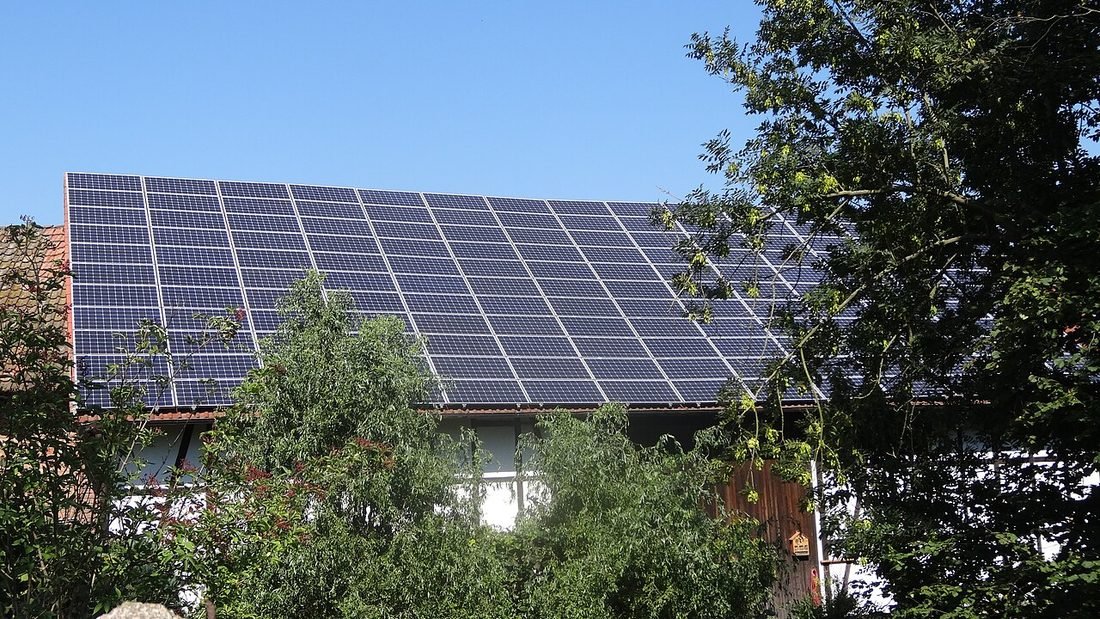
Image: Solar panels building Hochstedt, Nordhausen by Aschroet, CC0, via Wikimedia Commons.
Rooftop solar is a building service, an electrical connection and, for many buyers, a subsidy application at the same time. Each has its own approvals. This guide sets out solar installation permissions in Raipur as a simple checklist so that you know who must say yes before work begins.
Quick answer: you need proof of roof rights, distribution company feasibility, a registered vendor if you want the subsidy and, for apartments, society consent. Your installer should manage the sequence.
| Approval | From whom | Needed when | Notes |
|---|---|---|---|
| Roof ownership or consent | Owner, co-owners, society | Always | Written, signed, kept on file |
| Society or association NOC | Housing society or RWA | Apartments and shared roofs | General-body resolution preferred |
| Distribution company feasibility | CSPDCL | Grid-connected systems | Checks load, meter and network |
| Net meter installation and inspection | CSPDCL | Net-metered systems | Needed before commissioning |
| Portal registration and vendor selection | National portal | Subsidy applicants | Registered vendor required |
| Fire safety and clearances | Building owner, insurer, local rules | Commercial and large plants | Maintain access and isolation |
| Load enhancement | CSPDCL | If sanctioned load is too low | Apply early |
The roof is usually common property. Seek a general-body resolution for rooftop use, ideally with a clear agreement on who owns the plant and how savings are shared. Housing societies can use the RWA subsidy for common-area solar. See solar for apartments and housing societies.
Get the owner's written consent and roof access. Check your connection category and sanctioned load. Large commercial plants may need additional approvals and protection settings coordinated with the distribution company. See solar for shops and MSMEs.
Net-metered capacity is linked to your sanctioned load. If your plant is larger than your load allows, you may need a load increase. Ask the installer to check this before ordering equipment. Our CSPDCL net metering guide explains the process.
Missing consents, unpaid dues on the connection, a name mismatch between bill and Aadhaar, an unregistered installer or a sanctioned load that is too low. A quick pre-check with your installer avoids most of them. See also PM Surya Ghar subsidy status and delay.
An owner of a top-floor flat wants solar. The roof is a common terrace. The owner approaches the managing committee, which places the matter before the general body. A resolution allows a shared 12 kW plant for lifts and pumps, with the top-floor owner given priority for a small dedicated section under a written agreement. The society applies for feasibility and the RWA subsidy, appoints a registered vendor and records the decision in the minutes. Work starts only after all of this, avoiding the disputes that arise when one resident installs panels without consent.
| Customer | Must have | Often forgotten |
|---|---|---|
| Independent house owner | Roof ownership, bill in own name, feasibility | Load enhancement if load is low |
| Co-owned or joint-family home | Consent of all co-owners | Written consent on record |
| Apartment owner | General-body resolution or NOC | Agreement on plant ownership and savings |
| Tenant | Landlord's written consent and roof access | What happens at lease end |
| Shop or office owner | Roof rights, feasibility, correct tariff category | Landlord consent for rented premises |
| Factory | Structural study, feasibility, protection settings | Fire-safety and insurer approvals |
Allow extra time for societies, since meetings and notices take longer than portal steps.
Permissions are paperwork, not obstacles, if you start with the right documents. To act on it, book a survey with a solar company in Raipur, ask how their solar installation in Raipur process works and compare them using the best solar company in Raipur questions. Our solar in Raipur overview and solar Raipur neighbourhood guide fill in the local detail. More articles are on the blog, and PM Surya Ghar Yojana in Raipur covers the scheme.
For a grid-connected, net-metered system you need feasibility approval from the distribution company. Apartment owners need society or roof-owner consent. Subsidy applicants must register on the national portal.
A no-objection certificate from the housing society or building association allowing you to use the roof or common area. It is usually required for apartments.
Rooftop solar usually does not require new plan approval, but local rules and heritage areas can differ. Ask your installer and local authority.
An increase in your sanctioned load to match your solar and appliance capacity. It may be needed before net metering.
A good installer handles portal registration, feasibility, metering and inspection, while you provide documents and signatures.
Visit C-29, Sector 3, Devendra Nagar, Raipur, Chhattisgarh 492001, call 083051 31420 or send your details online for a free survey and a written quotation. Our solar installation in Raipur team replies the same working day.
Looking for the best solar company in Raipur? See how solar in Raipur works, check the solar Raipur locality guide and book solar installation in Raipur with a trusted solar company in Raipur. Our checklist for the best solar company in Raipur shows what to ask. Browse every article on the solar blog, or see PM Surya Ghar Yojana in Raipur and our solar services.
Document checklist, portal registration, feasibility and net meter coordination from a registered vendor in Raipur.